Writers Read

“I don’t have patience for people who say ‘I want to be a writer, but I don’t have time to read.’ If you don’t have time to read, you can’t be a writer.”

— Stephen King 

I’ve read hundreds of books so far, on my to a thousand, and I enjoy reading. 

But sometimes I’ll read the first chapter or two of a book and not finish it, if I can’t get into it. 

But for the most part, I finish reading the books I start. 

Some books I read for entertainment, some I read to give myself ideas for writing, and some I read to learn something. 

There’s no end to what any person can learn, and reading books is one of the most practical methods for learning, especially learning to write. 

One Book Can Change Your Life

“People don’t realize how a man’s whole life can be changed by one book.”

— Malcolm X  

One of the first books that changed my life was Way of The Peaceful Warrior by Dan Millman. I read it first when I was 19 years old, the summer before my sophomore year of college.  

I had just been betrayed by some people who I thought were my friends, and rather than be upset about it, I turned to reading. 

I had been a lone wolf anyway, so letting go of people I thought were friends wasn’t that difficult anyway. (But I did feel a sort of sting for a week or two).

I learned early to love myself and not seek approval or love from people outside of myself. 

And this book helped me love myself more. 

It helped expand my perspective on the world and universe. 

I wrote a summary of the book here, but some of the messages in the book are: 

“Be happy now, without reason.”  

“You are much more than you think.”  

And “Life is much more than what any one of us can think.” .. there’s a lot more to life than our thoughts about it. 

And “Actions are more important than thoughts.” 

Anyway, I’ve read in the hundreds of books at this point. Sometimes it takes reading 15 to 20 books to find the one that I really connect with. 

Do you have a book that has changed your life?

33 Taoist Ideas from The Tao of Pooh

The Tao of Pooh is a novel written by Benjamin Hoff. 

Hoff explains Taoism through Winne-the-Pooh tales in this book. Here are 33 of the best verses from The Tao of Pooh:

1 “That’s when I began to get an idea: to write a book that explained the principles of Taoism through Winnie-the-Pooh, and explained Winnie-the-Pooh through the principles of Taoism.”

2 “What’s that?” The Unbeliever asked.
“Wisdom from a Western Taoist,” I said.
“It sounds like something from Winnie-the-Pooh,” he said.
“It is,” I said.
“That’t not about Taoism,” he said.
“Oh, yes it is,” I said. 
“No, it’s not,” he said.
“What do you think it’s about?” I said.
“It’s about this dumpy litter bear that wanders around asking silly questions, making up songs, and going though all kinds of adventures, without ever accumulating any amount of intellectual knowledge or losing his simpleminded sort of happiness. That’s what it’s about,” he said.
“Same thing,” I said.

3 “As any old Taoist walking out of the woods can tell you, simpleminded does not mean stupid. It’s rather significant that the Taoist ideal is that of the still, calm, reflecting ‘mirror-mind’ of the Uncarved Block.”

4 “The essence of the principle of the Uncarved Block is that things in their original simplicity contain their own natural power, power that it easily spoiled and lost when that simplicity is changed.”

5 “When you discard arrogance, complexity, and a few other things that get in the way, sooner or later you will discover the simple, childlike, and mysterious secret known to those of the uncarved block: Life is Fun.” 

6 “From the state of the uncarved block comes the ability to enjoy the simple and the quiet, the natural and the plain. Along with that comes the ability to do things spontaneously and have them work, odd as that may appear to others at times.”

7 “In the final section of the Tao Te Ching, Lao-tse wrote, ‘the wise are not learned; the learned are not wise’ – an attitude shared by countless Taoists before and since.”

8 “The Taoist writer Chuang-tse worded it this way: ‘A well-frog cannot imagine the ocean, nor can a summer insect conceive of ice. How then can a scholar understand the Tao? He is restricted by his own learning.’”

9 “You might say that while Rabbit’s little routine is that of knowledge for the sake of being clever, and while Owl’s is that of knowledge for the sake of appearing wise, Eeyore’s is knowledge for the sake of complaining about something. As anything who doesn’t have it can see, the eeyore attitude gets in the way of things like wisdom and happiness, and pretty much prevents any sort of real accomplishment in life.” 

10 “It’s today,” said piglet.
“My favorite day,” said Pooh. 
Ours, too. We wonder why the scholars don’t think much of it. Perhaps it’s because they confuse themselves thinking about other days so much.”

11 “To the dedicated scholars, putting names on things is the most vital activity in the world. Tree. Flower. Dog. But don’t ask them to prune the tree, plant the flower, or take care of the dog, unless you enjoy unpleasant surprises. Living, growing things are beyond them, it seems.”

12 “Now, scholars can be very useful and necessary, in their own dull and unamusing way. They provide a lot of information. It’s just that there is something more, and that something more is what life is really all about.”

13 “The thing that makes someone truly different – unique, in fact – is something that cleverness cannot really understand. We will refer to that special something here as Inner Nature. Since it’s pretty much beyond the power of the intellect to measure or understand.”

14 “When you know and respect your own Inner Nature, you know where you belong. You also know where you don’t belong…One man’s food is often another man’s poison, and what is glamorous and exciting to some can be a dangerous trap to others. An incident in the life os Chuang-tse can serve as an example:

‘While sitting on the banks of the P’u River, Chuang-tse was approached by two representatives of the Prince of Ch’u, who offered him a position at court. Chuang-tse watched the water flowing by as if he had not heard. Finally, he remarked, ‘I am told that the Prince has a sacred tortoise, over two thousand years old, which is kept in a box, wrapped in silk and brocade.’ ‘That is true,’ the officials replied. ‘If the tortoise had been given a choice,’ Chuang-tse continued, ‘which do you think he would have like better – to have been alive in the mud, or dead within the palace?’ ‘To have been alive in the mud, of course,’ the men answered. ‘I too prefer the mud,’ said Chuang-tse. ‘Good-bye.’”

15 “Why does a chicken do what it does? You don’t know? Neither do we. Neither does anyone else. Science likes to strut around and act smart by putting its labels on everything, but if you look at them closely, you’ll see that they don’t really say much. ‘Genes?’ ‘DNA?’ Just scratching the surface. ‘Instinct?’ You know what that means:
Curious: ‘Why do birds fly south for the winter?’
Science: ‘Instinct.’
It means, ‘we don’t know.’
The important thing is, we don’t really need to know. We don’t need to imitate nearsighted science, which peers at the world through an electron microscope, looking for answers it will never find and coming up with more questions instead. We don’t need to play abstract philosopher, asking unnecessary questions and coming up with meaningless answers. What we need to do is recognize Inner Nature & work with things as they are. When we don’t, we get into trouble.”

16 “Everything has its own Inner Nature. Unlike other forms of life, though, people are easily led away from what’s right for them, because people have brain, and brain can be fooled. But many people do not look at it or listen to it, and consequently do not understand themselves very much. Having little understanding of themselves, they have little respect for themselves, and are therefore easily influenced by others.
But, rather than be carried along by circumstances and manipulated by those who can see the weakness and behavior tendencies that we ignore, we can work with our own characteristics and be in control of our lives. The way of self-reliance starts with recognizing who we are, what we’ve got to work with, and what works best for us.”

17 “By the time it came to the edge of the Forest the stream had grown up, so that it was almost a rivers, and, being grown-up, it did not run and hump and sparkle along as it used to do when it was younger, but moved more slowly. For it knew now where it was going, and it said to itself, ‘There is no hurry. We shall get there some day.’”

18 “Wu Wei means, ‘without doing, causing, or making.’ But practically speaking, it means without meddlesome, combative, or egotistical effort.”

19 “When you work with Wu Wei, you put the round peg in the round hole and the square peg in the square hole. No stress, no struggle. Egotistical Desire tries to force the round peg into the square hole and the square peg into the round hole. Cleverness tries to devise craftier ways of making pegs fit where they don’t belong. Knowledge tries to figure out why round pegs fit round holes, but not square holes. Wu Wei doesn’t try. It doesn’t think about it. It just does it. And when it does, it doesn’t appear to do much of anything. But things get done.”

20 “…then relax and try it again…Try doing something with a tense mind. The surest way to become tense, awkward, confused is to develop a mind that tries too hard – one that thinks too much. The animals in the forest don’t think too much; they just are. But with an overwhelming number of people, to misquote an old western philosopher, it’s a case of ‘I think, therefore I am confused.’ If you compare the City with the Forest, you may begin to wonder why it’s man who goes around classifying himself as the superior animal…
… ‘If people were superior to animals, they’d take better care of the world,’ said Pooh.”

21 “Things just happen in the right way, at the right time. At least they do when you let them, when you work with circumstances instead of saying, ‘this isn’t supposed to be happening this way,’ and trying hard to make it happen some other way… Later on, you can look back and say, ‘Oh, now I understand. That had to happen so that those could happen, and those had to happen in order for this to happen…’ Then you realize that even if you’d tried to make it all turn out perfectly, you couldn’t have done better, and if you’d really tried, you would have made a mess of the whole thing.”

22 “In the words of Chuang-tse, the mind of Wu Wei ‘flows like water, reflects like a mirror, and responds like an echo.’”

23 “Our bisy backson religions, sciences, and business ethics have tried their hardest to convince us that there is a great reward waiting for us somewhere, and that what we have to do is spend our lives working like lunatics to catch up with it. Whether it’s up in the sky, behind the next molecule, or in the executive suite, it’s somehow always further along than we are — just down the road, on the other side of the world, past the moon, beyond the stars…”

24 “…A way of life that keeps saying, ‘around the next corner, above the next step,’ works against the natural order of things and makes it so difficult to be happy and good that only a few get to where they would naturally have been in the first place — happy and good — and the rest give up and fall by the side of the road, cursing the world, which is not to blame but which is there to help show the way…those who think that the rewarding things in life are somehow beyond the rainbow…”

25 “The main problem with this great obsession for saving time is very simple: you can’t save time. You can only spend it. But you can spend it wisely or foolishly. The Bisy Backson has practically no time at all, because he’s too busy wasting it by trying to save it. And by trying to save every bit of it, he ends up wasting the whole thing. Henry David Thoreau put it this way, in Walden:

‘Why should we live with such hurry and waste of life? We are determined to be starved before we are hungry. Men say that a stitch in time saves nine, so they take a thousand stitches to-day to save nine tomorrow.’”

26 “…Each time the goal is reached, it becomes not so much fun, and we’re off to reach the next one, then the next one, then the next…if we do things in the wrong sort of way, it makes us miserable, angry, confused, and things like that. The goal has to be right for us, and it has to be beneficial, in order to ensure a beneficial process. But aside from that, it’s really the process that’s important. Enjoyment of the process is the secret that erases the myths of the great reward and saving time. Perhaps this can help to explain the everyday significance of the word Tao, the Way.”

27 “When we take the time to enjoy our surroundings and appreciate being alive, we find that we have no time to be Bisy Backsons anymore.”

28 “The poet Lu Yu wrote: 
The clouds above us join and separate,
The breeze in the courtyard leaves and returns.
Life is like that, so why not relax?
Who can stop us from celebrating?”

29 “In order to take control of our lives and accomplish something of lasting value, sooner or later we need to learn to Believe. We don’t need to shift our responsibilities onto the shoulders of some deified Spiritual Superman, or sit around and wait for Fate to come knocking at the door. We simply need to believe in the power that’s within us, and use it. When we do that, and stop imitating others and competing against them, things begin to work for us.”

30 “Like silence after noise, or cool, clear water on a hot, stuffy day, emptiness cleans out the messy mind and charges up the batteries of spiritual energy.”

31 “Why do the enlightened seem filled with light and happiness, like children? Because they are. The wise are children who know. Their minds have been emptied of the countless minute something of small learning, and filled with the wisdom of the Great Nothing, the Way of the Universe.”

32 “The masters of life know the Way, for they listen to the voice within them, the voice of wisdom and simplicity, the voice that reasons beyond cleverness and knows beyond knowledge.”

33 Confucius, Buddha, & Lao-tse 

“ …the theme of the painting is well known: We see three men standing around a vat of vinegar. Each has dipped his finger into the vinegar and tasted it. The expression on each man’s face shows his individual reaction. Since the painting is allegorical, we are to understand that these are no ordinary vinegar tasters, but are instead representatives of the “Three Teachings” of China, and that the vinegar they are camping represents the Essence of Life. The three masters are Confucius, Buddha, and Lao-tse, author of the oldest existing book of Taoism. The first has a sour look on his face, the second wears a bitter expression, but the third man is smiling. 

To Confucius, life seemed rather sour. He believed that the present was out of step with the past, and that the government of man on earth was out of harmony with the Way of Heaven, the government of the universe…A saying was recorded about Confucius: “If the mat was not straight, the Master would not sit.” This ought to give an individual of the extent to which things were carried out under Confucianism. 

To Buddha, the second figure in the painting, life on earth was bitter, filled with attachments and desires that led to suffering. The world was seen as a setter of traps, a generator of illusions, a revolving wheel of pain for all creatures. In order to find peace, the Buddhist considered it necessary to transcend “the world of dust” and reach Nirvana, literally a state of “no wind.” 

To Lao-tse, the harmony that naturally existed between heaven and earth from the very beginning could be found by anyone at any time, but not by following the rules of the Confucianists. According to Lao-tse, the more man interfered with the natural balance produced and governed by the universal laws, the further away harmony retreated into the distance. The more forcing, the more trouble. Whether heavy or light, wet or dry, fast or slow, everything had its own nature already within it, which could not be violated without causing difficulties. When abstract and arbitrary rules were imposed from the outside, struggle was inevitable. Only then did life become sour. To Lao-tse, the world was not a setter of traps but a teacher of valuable lessons…A basic principle of Lao-tse’s teaching was that this way of the universe could not be adequately described in words, and that it would be insulting both to its unlimited power and to the intelligent human mind to attempt to do so. Still, its nature could be understood, and those who cared most about it, and the life from which it was inseparable, understood it best.”

Fight For Your Mental Freedom

“If the words ‘life, liberty, and the pursuit of happiness’ don’t include the right to experiment with your own consciousness, then the Declaration of Independence isn’t worth the hemp it was written on.”

— Terence McKenna

Experimenting with your consciousness is not for everyone, and it’s sometime seen as taboo, but it should always remain open to experiment with. Clearly. Even if it brings clouds & smoke your way at times, it can also bring clarity and love.

I don’t encourage anyone to experiment with their consciousness. I encourage people to do what works for them.

I, though, once or twice a year, use a high dosage of a psychedelic, and it takes me to often heavenly and sometimes hellish places … it’s worth it to me every time, since I rarely do it, and since the experience is so alien & cosmic & beautiful, for me at least.

The integrations before during & after are important, but sometimes the purpose is about the experience itself; nothing more & nothing less. There & then. Here & now.

It’s not for everyone, but if you’re interested in the psychedelic experience, here is a guide containing preparations & activities before during & after your experience.

Trip well 🙂

The Phantom Mind & The Active Present

“. . Action always happens in the present, because it is an expression of the body, which can only exist in the here and now. But the mind is like a phantom that lives only in the past or future. It’s only power over you is to draw your attention out of the present.”

— Dan Millman

If I were to tell you that there are people & organizations working to manipulate people out of the true present moment, you may or may not believe me.

There are also some who work in love to bring themselves & others into a loving present moment – which is more difficult than living in the past or future, but it’s where everything is truly happening, all the time.

Anyway, Millman talks about the phantom mind & the present moment here. Action happens in the present moment, but even in action many people are living in the past or future & not actually in the present.

The phantom mind is powerful, but the true present moment is more powerful, & usually more beautiful.

Meditation practice is one of the best ways to experience the direct present moment.

Begin here, now 🙂

27 Profound Philosophical Quotes From Seneca’s ‘On The Shortness of Life’

In this book, On The Shortness of Life, The philosopher Seneca inspires me & readers to live our best lives, to philosophize, to think long term with purpose & yet live fully today.

1 “No one asserts his claim to himself, everyone is wasted for the sake of another…. No one is his own master.”

2 “It is not that we have a short space of time, but that we waste much of it. Life is long enough, and it has been given in sufficiently generous measure to allow the accomplishment of the very greatest things if the whole of it is well invested…But when it is squandered in luxury and carelessness, when it is devoted to no good end, forced at last by the ultimate necessity we perceive that it has passed away before we were aware that it was passing.”

3 “Why do we complain of Nature? She has shown herself kindly; life, if you know how to use it, is long. But one man is possessed by an avarice that is insatiable, another by a toilsome devotion to tasks that are useless; one man is besotted with wine, another is paralyzed by sloth; one man is exhausted by an ambition that always hangs upon the decision of others, another, driven on by the greed of the trader, is led over all lands and all seas by the hope of gain; some are tormented by a passion for war and are always either bent upon inflicting danger upon others or concerned about their own; some there are who are worn out by voluntary servitude in a thankless attendance upon the great; many are kept busy either in the pursuit of other men’s fortune or in complaining of their own; many, following no fixed aim, shifting and inconstant and dissatisfied, are plunged by their fickleness into plans that are ever new; some have no fixed principle by which to direct their course, but Fate takes them unawares while they loll and yawn—so surely does it happen that I cannot doubt the truth of that utterance which the greatest of poets delivered with all the seeming of an oracle: “The part of life we really live is small”

4 “Look at those whose prosperity men flock to behold; they are smothered by their blessings. To how many are riches a burden! From how many do eloquence and the daily straining to display their powers draw forth blood! How many are pale from constant pleasures! To how many does the throng of clients that crowd about them leave no freedom!”

5 “Men do not suffer anyone to seize their estates, and they rush to stones and arms if there is even the slightest dispute about the limit of their lands, yet they allow others to trespass upon their life—nay, they themselves even lead in those who will eventually possess it…No one is to be found who is willing to distribute his money, yet among how many does each one of us distribute his life!”

6 “Cicero said that he was ‘half a prisoner.’ But, in very truth, never will the wise man resort to so lowly a term, never will he be half a prisoner—he who always possesses an undiminished and stable liberty, being free and his own master and towering over all others.”

7 “Finally, everybody agrees that no one pursuit can be successfully followed by a man who is busied with many things—eloquence cannot, nor the liberal studies—since the mind, when its interests are divided, takes in nothing very deeply, but rejects everything that is, as it were, crammed into it.”

8 “It takes the whole of life to learn how to live, and—what will perhaps make you wonder more—it takes the whole of life to learn how to die.”

9 “Believe me, it takes a great man and one who has risen far above human weaknesses not to allow any of his time to be filched from him, and it follows that the life of such a man is very long because he has devoted wholly to himself whatever time he has had.None of it lay neglected and idle; none of it was under the control of another, for, guarding it most grudgingly, he found nothing that was worthy to be taken in exchange for his time. And so that man had time enough, but those who have been robbed of much of their life by the public, have necessarily had too little of it.”

10 “And so there is no reason for you to think that any man has lived long because he has grey hairs or wrinkles; he has not lived long—he has existed long. For what if you should think that that man had had a long voyage who had been caught by a fierce storm as soon as he left harbour, and, swept hither and thither by a succession of winds that raged from different quarters, had been driven in a circle around the same course? Not much voyaging did he have, but much tossing about.”

11 “They keep themselves very busily engaged in order that they may be able to live better; they spend life in making ready to live! They form their purposes with a view to the distant future; yet postponement is the greatest waste of life; it deprives them of each day as it comes, it snatches from them the present by promising something hereafter. The greatest hindrance to living is expectancy, which depends upon the morrow and wastes to-day. You dispose of that which lies in the hands of Fortune, you let go that which lies in your own. Whither do you look? At what goal do you aim? All things that are still to come lie in uncertainty; live straightway.”

12 “The mind that is untroubled and tranquil has the power to roam into all the parts of its life; but the minds of the engrossed, just as if weighted by a yoke, cannot turn and look behind.”

13 “And so, however small the amount of it, it is abundantly sufficient, and therefore, whenever his last day shall come, the wise man will not hesitate to go to meet death with steady step.”

14 “To think that there is anyone who is so lost in luxury that he takes another’s word as to whether he is sitting down! This man, then, is not at leisure, you must apply to him a different term—he is sick, nay, he is dead; that man is at leisure, who has also a perception of his leisure. But this other who is half alive, who, in order that he may know the postures of his own body, needs someone to tell him—how can he be the master of any of his time?”

15 “Of all men they alone are at leisure who take time for philosophy, they alone really live; for they are not content to be good guardians of their own lifetime only. They annex ever age to their own; all the years that have gone ore them are an addition to their store. Unless we are most ungrateful, all those men, glorious fashioners of holy thoughts, were born for us; for us they have prepared a way of life. By other men’s labours we are led to the sight of things most beautiful that have been wrested from darkness and brought into light; from no age are we shut out, we have access to all ages, and if it is our wish, by greatness of mind, to pass beyond the narrow limits of human weakness, there is a great stretch of time through which we may roam.”

16 “Those who rush about in the performance of social duties, who give themselves and others no rest, when they have fully indulged their madness, when they have every day crossed everybody’s threshold, and have left no open door unvisited, when they have carried around their venal greeting to houses that are very far apart—out of a city so huge and torn by such varied desires, how few will they be able to see?”

17 “But the works which philosophy has consecrated cannot be harmed; no age will destroy them, no age reduce them; the following and each succeeding age will but increase the reverence for them, since envy works upon what is close at hand, and things that are far off we are more free to admire. *** The life of the philosopher, therefore, has wide range, and he is not confined by the same bounds that shut others in. He alone is freed from the limitations of the human race; all ages serve him as if a god. Has some time passed by? This he embraces by recollection. Is time present? This he uses. Is it still to come? This he anticipates. He makes his life long by combining all times into one.”

18 “He will have friends from whom he may seek counsel on matters great and small, whom he may consult every day about himself, from whom he may hear truth without insult, praise without flattery, and after whose likeness he may fashion himself.”

19 “But those who forget the past, neglect the present, and fear for the future have a life that is very brief and troubled; when they have reached the end of it, the poor wretches perceive too late that for such a long while they have been busied in doing nothing.”

20 “They lose the day in expectation of the night, and the night in fear of the dawn.”

21 “The very pleasures of such men are uneasy and disquieted by alarms of various sorts, and at the very moment of rejoicing the anxious thought comes over them: How long will these things last?” This feeling has led kings to weep over the power they possessed, and they have not so much delighted in the greatness of their fortune, as they have viewed with terror the end to which it must some time come.”

22 “Moreover, what is doomed to perish brings pleasure to no one; very wretched, therefore, and not merely short, must the life of those be who work hard to gain what they must work harder to keep. By great toil they attain what they wish, and with anxiety hold what they have attained; meanwhile they take no account of time that will never more return.”

23 “The condition of all who are engrossed is wretched, but most wretched is the condition of those who labour at engrossments that are not even their own, who regulate their sleep by that of another, their walk by the pace of another, who are under orders in case of the freest things in the world—loving and hating. If these wish to know how short their life is, let them reflect how small a part of it is their own.”

24 “And so when you see a man often wearing the robe of office, when you see one whose name is famous in the Forum, do not envy him; those things are bought at the price of life.  They will waste all their years, in order that they may have one year reckoned by their name.”

25 “Meantime, while they rob and are being robbed, while they break up each other’s repose, while they make each other wretched, their life is without profit, without pleasure, without any improvement of the mind.”

26 “No one keeps death in view, no one refrains from far-reaching hopes; some men, indeed, even arrange for things that lie beyond life—huge masses of tombs and dedications of public works and gifts for their funeral-pyres and ostentatious funerals. But, in very truth, the funerals of such men ought to be conducted by the light of torches and wax tapers, as though they had lived but the tiniest span.”

27 “And so, my dearest Paulinus, tear yourself away from the crowd, and, too much storm-tossed for the time you have lived, at length withdraw into a peaceful harbour. Think of how many waves you have encountered, how many storms, on the one hand, you have sustained in private life, how many, on the other, you have brought upon yourself in public life; long enough has your virtue been displayed in laborious and unceasing proofs—try how it will behave in leisure. The greater part of your life, certainly the better part of it, has been given to the state; take now some part of your time for yourself as well. And I do not summon you to slothful or idle inaction, or to drown all your native energy in slumbers and the pleasures that are dear to the crowd. That is not to rest; you will find far greater works than all those you have hitherto performed so energetically, to occupy you in the midst of your release & retirement.”

7 Meditations For Any Time & Place

Life is all sorts of things. 

There are a range of ways of life, and it is what it is. It’s alright.

Distractions surround us daily, and personally, meditating is a method I use to get focused & be empowered, and to journey well.

I wrote & published The 7 Psychedelic Meditations as a meditation guide for people who use psychedelics, but these meditations can be practiced by anyone in everyday life.

These meditations help me & others live beyond distractions, and into a more focused & strong & centered life.

Buy it today on Amazon, and let me know what you think! 

Enjoy 🙂

27 Empowering Quotes from Don Jose Ruiz’s Wisdom of the Shamans

1) Are there any areas of your life where you want to inflict your own beliefs on others? Do you try and control others? For instance, do you think the path of the shaman is the way for everyone? It isn’t. Other people are on their own paths and moving through life in their own time and at their own pace. 

2) One of the hallmarks of a shaman is that rather than adopting the beliefs of others, the shaman looks inside herself for the answers that are already there.

3) The shaman follows her own path, not one that was laid out by others. 

4) The story of our initiation also demonstrates how some shamans can commune with nature in a way that cannot be explained.

5) Despite the great interest in these miraculous occurrences, my father has never let these phenomena distract from the primary message of shamanism and his teachings: find your own personal freedom, heal yourself from the addiction to suffering, be of service to others. 

6) A power object, or what could also be called a totem, is a sacred object or symbol that a shaman forms a relationship with, which enables her to call upon the power of whatever the object represents. 

7) Animals live in complete awareness of the present moment without mitote or the parasite, and therefore they have direct access to silent wisdom. 

8) As I have been driving home throughout this book, the path of the shaman is about following your own truth, and yours will be different from mine. 

9) Am I honoring my own personal truth, or am I trying to live up to someone else’s ideals? 

10) For those of you who are unfamiliar with this term, self-domestication occurs when you take the beliefs of others and punish or otherwise coerce yourself into following them, even when they go against your own personal truth. With self-domestication, you no longer need the domesticator to be in your life, as you have taken over that role. 

11) Finally, when he looked deep within himself and admitted his own personal truth, a massive weight lifted from his shoulders. All the internal struggle of trying to be something that he wasn’t disappeared. 

12) I don’t know if my grandmother knew any of these similar stories, but I do know that she was clear about one thing, and that is that God, the Great Spirit, the nagual, or whatever word you use to describe the Divine, resides in all of us.

13) While we can’t do anything to change the dream of others, our own dream is entirely within our power.

14) For instance, how do you treat people who don’t share your political or spiritual beliefs or other viewpoints you consider important? Do you try and subjugate them to your own perspective? Do you try to domesticate them to your way of thinking? By attempting to domesticate others, we feed our own addiction to suffering. 

15) One practice to reverse this within yourself is to consciously focus on the divinity in the human sitting in front of you, respecting their choices and point of view, and acting toward them from a place of love. 

16) If you want to have a sacred interaction with another, the first step is to really listen to them.

17) Listen without judging; listen without thinking about what you will say next. Just listen. By doing so, you will find out what this person’s message is for you and experience the sacredness of that connection in the process. 

18) …After many years, on the anniversary of his death, the woman began to make her customary pilgrimage, but this time, when she reached the top there was a great shaman sitting next to the waterfall. The shaman said to her, “It is wonderful to honor the dead, but who is it that you are honoring?” 
The young woman was confused. 
The shaman continued, “If you want to honor the dead, you honor the wrong person. Look in the mirror. It is you who are dead. You aren’t allowing yourself to go on with your life. Anyone who lives chained to the past lives in fear and grief. Regret isn’t living; it is dying.” 

19) During the Day of the Dead, we imagine a loved one coming from beyond the grave. They see how you are suffering, and they tell you, “Hey, you are alive! You are not dead, you are alive! C’mon, wake up and celebrate life! Stop being dead.” 

20) So often we search for our own personal freedom with such diligence and seriousness that we forget that the shamanic path is also about having fun.We can get so devoted to our inner and outer work that we forget that a strong belly laugh is one of the best cures for the mind’s addiction to suffering. 

21) Enjoying life and doing things for no other reason than to have fun is a part of maintaining balance.

22) In shamanism, celebrating life means having an open and grateful heart for all that life brings us. This open heart is what allows you to see beyond what the mind typically labels as “good” or “evil,” enough or not enough, even happy and sad. When you reside in the nagual that exists in all things, you find that you are able to keep your heart open even in the face of terrorist attacks, natural disasters, or any other nightmare in the Dream of the Planet.

23) The alternative is to let these situations draw you back into the addiction of suffering, and that’s how the cycle of negativity continues. 

24) Celebrating life doesn’t mean you won’t experience the normal human emotions of sadness and grief. One of the beautiful things about being human is that we can have multiple emotions, positive and negative, at the same time. It means you feel those emotions without fighting them, without turning them into the emotional poisons of anger, a desire for revenge, or hatred. Embracing tragedies with an open heart is one of the most difficult practices to undertake. It takes great courage even to attempt to live in this way. 

25) So often we hold on to those old ideas of vice and virtue, enough or not enough. This is one of the things that cause us to live as though we were dead. In order to celebrate our perfection, we must give up the idea that we are a project waiting to be fixed or a goal that needs to be obtained. You are not damaged goods. You are perfect just as you are. 

26) There is nothing wrong with you, and this includes when you are in suffering or creating suffering. Suffering does not mean that you are in any way deficient or not enough or incapable.

27) Here is what is important to remember, a message directly from my heart to yours, truth to truth: You are perfect, my friend, exactly as you are. Celebrate it! 

4 Encapsulating Messages from the Book “The Alchemist”


“…That’s what alchemists do. They show that, when we strive to become better than we are, everything around us becomes better, too.”


“What is an alchemist?”
“It’s a man who understands nature and the world.”

the-alchemist-coacht.blog_


The book The Alchemist follows the story of a boy, Santiago, who becomes a shepherd to pursue his dream of traveling to “know the world,” he says. 

Santiago’s parents wanted him to become a priest but he insisted on following his passion of traveling. When he told his parents he wanted to travel and not be a priest his father was against the idea at first but ended up supporting his son with 3 gold coins.


“If someone isn’t what others want them to be, the others become angry. Everyone seems to have a clear idea of how other people should lead their lives, but none about his or her own.

During Santiago’s travels as a shepherd he encounters a woman who interprets dreams. He has been having a reoccurring dream so he decides to have her interpret it, although he is hesitant in trusting her. 

She tells him “dreams are the language of God” and after hearing his dream she tells him he must go to the pyramids in Egypt where there is a treasure for him. Santiago was disappointed in her interpretation so he left but his journey continued…


The next person Santiago encounters is a king:

Santiago: “Why would a king be talking to a shepherd?”

King: “For several reasons. But let’s say that the most important is that you have succeeded in discovering your destiny…”

“The boy didn’t know what a person’s ‘destiny’ was.”

King: “It’s what you have always wanted to accomplish. Everyone, when they are young, knows what their destiny is…
…At that point in their lives, everything is clear and everything is possible. They are not afraid to dream, and to yearn for everything they would like to see happen to them in their lives. But, as time passes, a mysterious force begins to convince them that it will be impossible for them to realize their destiny.”

lessons-from-the-alchemist-HEADER2

“The old man(king) pointed to a baker standing in his shop window at one corner of the plaza. ‘When he was a child, that man wanted to travel too. But he decided first to buy his bakery and put some money aside. When he’s an old man, he’s going to spend a month in Africa. He never realized that people are capable, at any time in their lives, of doing what they dream of.’”

“’What’s the world’s greatest lie?’ The boy asked…
It’s this: that at a certain point in our lives, we lose control of what’s happening to us, and our lives become controlled by fate. That’s the world’s greatest lie.’”


Santiago’s decision to live a life that he wanted rather than what his parents wanted for him sent him in the direction of living his dreams. He followed his intuitive voice within and that made all the difference.

He still had some doubts about the decision he had made. But he was able to understand one thing: making a decision was only the beginning of things. When someone makes a decision, he is really diving into a strong current that will carry him to places he had never dreamed of when he first made the decision.

Over the course of the book Santiago meets a number of other people who all seem to be in his life for a reason beyond his momentary understanding. He learns lessons as he faces obstacles and setbacks which come when any person chooses to pursue their dreams.

“He read the lives of the various people who have succeeded in doing so…They were fascinating stories: each of them lived out his destiny to the end. They traveled, spoke with wise men, performed miracles for the incredulous, and owned the Philosopher’s Stone and the Elixir of Life.”

moebius-alchemist-3.jpg

Santiago learns many things throughout his journey like to persist in following his dreams although he is continually tested, to trust life and the process, and that the “soul of the world” is a world beyond words.

“‘That’s the principle that governs all things,’ he said. ‘In alchemy, it’s called the Soul of the World. When you want something with all your heart, that’s when you are closest to the Soul of the World. It’s a positive force.’”

Learn more about The Alchemist in the following 4 sections of encapsulating messages:

1) Follow your Dreams
2) You will be Tested
3) Trust Life and the Process
4) The Soul of the World
5) Favorite 23 Quotes from The Alchemist


coacht.blog dream1) Follow your Dreams


“But what if I can’t?”
“Then you’ll die in the midst of trying to realize your destiny. That’s a lot better than dying like millions of other people, who never even knew what their destinies were.”

He still had some doubts about the decision he had made. But he was able to understand one thing: making a decision was only the beginning of things. When someone makes a decision, he is really diving into a strong current that will carry him to places he had never dreamed of when he first made the decision.

“Why don’t people’s hearts tell them to continue to follow their dreams?”

“Because that’s what makes a heart suffer most, and hearts don’t like to suffer.”

“If a person is living out his destiny, he knows everything he needs to know. There is only one thing that makes a dream impossible to achieve: the fear of failure.”

“And what went wrong when other alchemists tried to make gold and were unable to do so?”
“They were looking only for gold. They were seeking the treasure of their destiny, without wanting actually to live out the destiny.”

“People are afraid to pursue their most important dreams, because they feel that they don’t deserve them, or that they’ll be unable to achieve them.”

“My heart is afraid that it will have to suffer.”
“Tell your heart that the fear of suffering is worse than the suffering it self. And that no heart has ever suffered when it goes in search of its dreams, because every second of the search is a second’s encounter with God and with eternity.”

“Don’t give in to your fears. If you do, you won’t be able to talk to your heart.”

“…When I have been truly searching for my treasure, Ive discovered things along the way that I never would have seen had I not had the courage to try things that seemed impossible for a shepherd to achieve.”

“It’s true; life really is generous to those who pursue their destiny.”

“To do that successfully, I must have no fear of failure. It was my fear of failure that first kept me from attempting the Master Work. Now, I’m beginning what I could have started ten years ago. But I’m happy at least that I didn’t wait twenty years.”

“Everyone on earth has a treasure that awaits him,’ his heart said. ‘We, people’s hearts, seldom say much about those treasures, because people no longer want to go in search of them. We speak of them only to children. Later, we simply let life proceed, in its own direction, toward its own fate. But, unfortunately, very few follow the path laid out for them—the path to their destinies, and to happiness. Most people see the world as a threatening place, and, because they do, the world turns out, indeed, to be a threatening place.”

“And anyone who interferes with the destiny of another thing never will discover his own.”

“The boy told himself that, on the way toward realizing his own destiny, he had learned all he needed to know, and had experienced everything he might have dreamed of.”


coacht.blog-alchemist-test-e1566333572149.jpg

2) You will be Tested 

“The closer he got to the realization of his dream, the more difficult things became…In his pursuit of the dream, he was being constantly subjected to tests of his persistence and courage. So he could not be hasty, not impatient. If he pushed forward impulsively, he would fail to see the signs and omens left by God along his path.”

“He realized that he had to choose between thinking of himself as the poor victim of a thief and as an adventurer in quest of his treasure.”

“‘I had to test your courage,’ the stranger said. Courage is the quality most essential to understanding the Language of the World.”

“…You must not let up, even after having come so far. You must love the desert, but never trust it completely. Because the desert tests all men: it challenges every step, and kills those who become distracted.”

“‘Once you get into the desert, there’s no going back,’ said the camel driver. ‘And, when you can’t go back, you have to worry only about the best way of moving forward.’”

“It’s only those who are persistent, and willing to study things deeply, who achieve the Master Work.”

“What you still need to know is this: before a dream is realized, the Soul of the World tests everything that was learned along the way. It does this not because it is evil, but so that we can, in addition to realizing our dreams, master the lessons we’ve learned as we’ve moved toward that dream. That’s the point at which most people give up. It’s the point at which, as we say in the language of the desert, one ‘dies of thirst just when the palm trees have appeared on the horizon.’”

“…Every search begins with beginner’s luck. And every search ends with the victor’s being severely tested.”

“To show you one of life’s simple lessons. When you possess great treasures within you, and try to tell others of them, seldom are you believed.”

“When someone sees the same people every day, as had happened with him at the seminary, they wind up becoming a part of that person’s life. And then they want the person to change. If someone isn’t what others want them to be, the others become angry. Everyone seems to have a clear idea of how other people should lead their lives, but none about his or her own.”

“One is loved because one is loved. No reason is needed for loving.”

“In his heart, he felt a strange sense of joy: he was about to die in pursuit of his destiny.”


coacht.blog-alchemist-trust.jpg3) Trust Life and the Process

“Well, maybe I just want to know the future so I can prepare myself for what’s coming.”

“If good things are coming, they will be a pleasant surprise. If bad things are, and you know in advance, you will suffer greatly before they even occur.”

We are afraid of losing what we have, whether it’s our life or our possessions and property. But this fear evaporates when we understand that our life stories and the history of the world were written by the same hand.

“When you want something, all the universe conspires to help you achieve it. But the old king hadn’t said anything about being robbed, or about endless deserts, or about people who know what their dreams are but don’t want to realize them.”

“In order to find the treasure, you will have to follow the omens. God has prepared a path for everyone to follow. You just have to read the omens that he left for you.”

“There’s no such thing as coincidence…”
The boy knew what he was about to describe though: the mysterious chain that links one thing to another, the same chain that had caused him to become a shepherd, that had caused his recurring dream, that had brought him to a city near Africa, to find a king, and to be robbed in order to meet a crystal merchant, and…”

“He had not a cent in his pocket, but he had faith.”

“The camel driver, though, seemed not to be very concerned with the threat of war. ‘I’m alive,’ he said to the boy. ‘When I’m eating, that’s all I think about. If I’m on the march, I just concentrate on marching. If I have to fight, it will be just as good a day to die as any other. Because I don’t live in either my past or my future. I’m interested only in the present. If you can concentrate always on the present, you’ll be a happy man.”

“When you are in love, things make even more sense.”

“Don’t forget that everything you deal with is only one thing and nothing else. And don’t forget the language of omens. And, above all, don’t forget to follow your destiny through to its conclusion.”

“Don’t think about what you’ve left behind…Everything is written in the Soul of the World, and there it will stay forever…If what one finds is made of pure matter, it will never spoil. And one can always come back. If what you had found was only a moment of light, like the explosion of a star, you would find nothing on your return.”


coacht.blog soul

4) Soul of the World

“He learned the most important part of the language that all the world spoke—the language that everyone on earth was capable of understanding in their heart. It was love.”

“It was the pure Language of the World. It required no explanation, just as the universe needs none as it travels through endless time.”

I learned that the world has a soul, and that whoever understands that soul can also understand the language of things.

“You already know about alchemy. It is about penetrating to the Soul of the World, and discovering the treasure that has been reserved for you.”

“…And then there were the others, who were interested only in gold. They never found the secret.”

“What you still need to know is this: before a dream is realized, the Soul of the World tests everything that was learned along the way. It does this not because it is evil, but so that we can, in addition to realizing our dreams, master the lessons we’ve learned as we’ve moved toward that dream. That’s the point at which most people give up. It’s the point at which, as we say in the language of the desert, one ‘dies of thirst just when the palm trees have appeared on the horizon.’”

“At that moment, it seemed to him that time stood still, and the Soul of the World surged within him.”

“He realized: If I can learn to understand this language without words, I can learn to understand the world.”

“This Soul of the World allowed them to understand anything on the face of the earth, because it was the language with which all things communicated.”

“No. It’s like the flight of those two hawks; it cannot be understood by reason alone. The Emerald Tablet is a direct passage to the Soul of the World…”

“Love is the force that transform and improves the Soul of the World.”

“The boy reached through to the Soul of the World, and saw that it was a part of the Soul of God. And he saw that the Soul of God was his own soul. And that he, a boy, could perform miracles.”

“‘Everything in life is an omen’, said the Englishman… ‘There is a universal language, understood by everybody, but already forgotten. I am in search of that universal language, among other things. That’s why I’m here. I have to find a man who knows that universal language. An alchemist.’”

“All his life and all his studies were aimed at finding the one true language of the universe.”

“How do I immerse myself in the desert?”
“Listen to your heart. It knows all things, because it came from the Soul of the World, and it will one day return there.”

“‘The desert takes our men from us, and they don’t always return,’ she said. ‘We know that, and we are used to it. Those who don’t return become a part of the clouds, a part of the animals that hide in the ravines and of the water that comes from the earth. They become a part of everything…they become the Soul of the World.”

“In the silence, the boy understood that the desert, the wind, and the sun were also trying to understand the signs written by the hand, and were seeking to follow their paths, and to understand what had been written on a single emerald. He saw that omens were scattered throughout the earth and in space, and that there was no reason or significance attached to their appearance; he could see that not the deserts, nor the winds, nor the sun, not people knew why they had been created. But that the hand had a reason for all of this, and that only the hand could perform miracles, or transform the sea into a desert…or a man into the wind.”

“He had only one explanation for this fact: things have to be transmitted this way because they were made up from the pure life, and this kind of life cannot be captured in pictures or words. Because people become fascinated with pictures and words, and wind up forgetting the Language of the World.”


coacht.blog Alchemist quote

5) My Favorite 23 Quotes from The Alchemist

1) “One is loved because one is loved. No reason is needed for loving.”

2) “…That’s what alchemists do. They show that, when we strive to become better than we are, everything around us becomes better, too.”

3) “The old man pointed to a baker standing in his shop window at one corner of the plaza. ‘When he was a child, that man wanted to travel too. But he decided first to buy his bakery and put some money aside. When he’s an old man, he’s going to spend a month in Africa. He never realized that people are capable, at any time in their lives, of doing what they dream of.’”

4) “But what if I can’t?”
“Then you’ll die in the midst of trying to realize your destiny. That’s a lot better than dying like millions of other people, who never even knew what their destinies were.”

5) ) “If someone isn’t what others want them to be, the others become angry. Everyone seems to have a clear idea of how other people should lead their lives, but none about his or her own.

6) He still had some doubts about the decision he had made. But he was able to understand one thing: making a decision was only the beginning of things. When someone makes a decision, he is really diving into a strong current that will carry him to places he had never dreamed of when he first made the decision.

7) “My heart is afraid that it will have to suffer.”
“Tell your heart that the fear of suffering is worse than the suffering it self. And that no heart has ever suffered when it goes in search of its dreams, because every second of the search is a second’s encounter with God and with eternity.”

8) “And what went wrong when other alchemists tried to make gold and were unable to do so?”
“They were looking only for gold. They were seeking the treasure of their destiny, without wanting actually to live out the destiny.”


9) “He learned the most important part of the language that all the world spoke—the language that everyone on earth was capable of understanding in their heart. It was love.”

10) “To show you one of life’s simple lessons. When you possess great treasures within you, and try to tell others of them, seldom are you believed.”

11) “It’s only those who are persistent, and willing to study things deeply, who achieve the Master Work.”

12) “In his heart, he felt a strange sense of joy: he was about to die in pursuit of his destiny.”

13) “‘I had to test your courage,’ the stranger said. ‘Courage is the quality most essential to understanding the Language of the World.”

14) “What you still need to know is this: before a dream is realized, the Soul of the World tests everything that was learned along the way. It does this not because it is evil, but so that we can, in addition to realizing our dreams, master the lessons we’ve learned as we’ve moved toward that dream. That’s the point at which most people give up. It’s the point at which, as we say in the language of the desert, one ‘dies of thirst just when the palm trees have appeared on the horizon.’”

15) “Well, maybe I just want to know the future so I can prepare myself for what’s coming.”
“If good things are coming, they will be a pleasant surprise. If bad things are, and you know in advance, you will suffer greatly before they even occur.”

16) “There’s no such thing as coincidence…”
The boy knew what he was about to describe though: the mysterious chain that links one thing to another, the same chain that had caused him to become a shepherd, that had caused his recurring dream, that had brought him to a city near Africa, to find a king, and to be robbed in order to meet a crystal merchant, and…”

17) “‘Everything in life is an omen’, said the Englishman… ‘There is a universal language, understood by everybody, but already forgotten. I am in search of that universal language, among other things.'”

18) “It was the pure Language of the World. It required no explanation, just as the universe needs none as it travels through endless time.”

19) “When you are in love, things make even more sense.”

20) “How do I immerse myself in the desert?”
“Listen to your heart. It knows all things, because it came from the Soul of the World, and it will one day return there.”

21) “Don’t think about what you’ve left behind…Everything is written in the Soul of the World, and there it will stay forever…If what one finds is made of pure matter, it will never spoil. And one can always come back. If what you had found was only a moment of light, like the explosion of a star, you would find nothing on your return.”

22) “He had only one explanation for this fact: things have to be transmitted this way because they were made up from the pure life, and this kind of life cannot be captured in pictures or words. Because people become fascinated with pictures and words, and wind up forgetting the Language of the World.”

23) “The camel driver, though, seemed not to be very concerned with the threat of war. ‘I’m alive,’ he said to the boy. ‘When I’m eating, that’s all I think about. If I’m on the march, I just concentrate on marching. If I have to fight, it will be just as good a day to die as any other. Because I don’t live in either my past or my future. I’m interested only in the present. If you can concentrate always on the present, you’ll be a happy man.”


I hope you enjoyed these messages from The Alchemist!

Receive related quotes and ideas once a week, subscribe to my weekly newsletter here!


3 Transformative Messages from Eckhart Tolle’s “A New Earth”

In A New Earth, author Eckhart Tolle shares his open-minded & progressing ideas to help you achieve the peace of God which surpasses understanding, as Jesus spoke of.

He helps you gain insight into the harming effects the human ego can have when unchecked, which is a core element holding you back from peace.

As you work on decreasing the ego in your life(techniques included in third section), you will grow in conscious awareness, staying present in the moment–alert, listening, less consumed with compulsive thinking, resulting in abundant peace & joy.

One of the main messages from this book is that you are not separate from life. You and life are one, you are whole, together, but our egos thrive on division; division from everything—life, others, and even yourself.

coacht.blog new earth

A few other fundamental concepts from the book include:

—Life to the fullest is lived Beyond Words

—The human egos current grip on humanity and what you can do about it

—Techniques & Parables to help you achieve peace

—Best Quotes

These 3 fundamental ideas and the best quotes each have their own section with the theme of being connected to life flowing through each section.

The meek are the egoless. They are those who have awakened to their essential true nature as consciousness and recognize that essence in all “others,” all life­forms. They live in the surrendered state and so feel their oneness with the whole and the Source. They embody the awakened consciousness that is changing all aspects of life on our planet, including nature, because life on earth is inseparable from the human consciousness that perceives and interacts with it. That is the sense in which the meek will inherit the earth.”

coacht.blog a new earth

I have been and am still working on a longer summary of each section(which I may or may not finish), but here are the shortened versions of each section!

You can be part of the shift toward this new consciousness, this New Earth.

Take your time & enjoy!

—Life to the fullest is lived Beyond Words

We live in a world overrun by words and thinking. 

Do you ever reminisce about childhood and wish to feel that joy & aliveness once again?

That joy is found when you don’t have a stream of endless thoughts, when you are in the present moment, acting “in the zone” or “flow” with no thought in mind.

“Some of those people who, through creative action, enrich the lives of many others simply do what they enjoy doing most without wanting to achieve or become anything through that activity.”

You are present when what you are doing is not primarily a means to an end (money, prestige, winning) but fulfilling in itself, when there is joy and aliveness in what you do.”

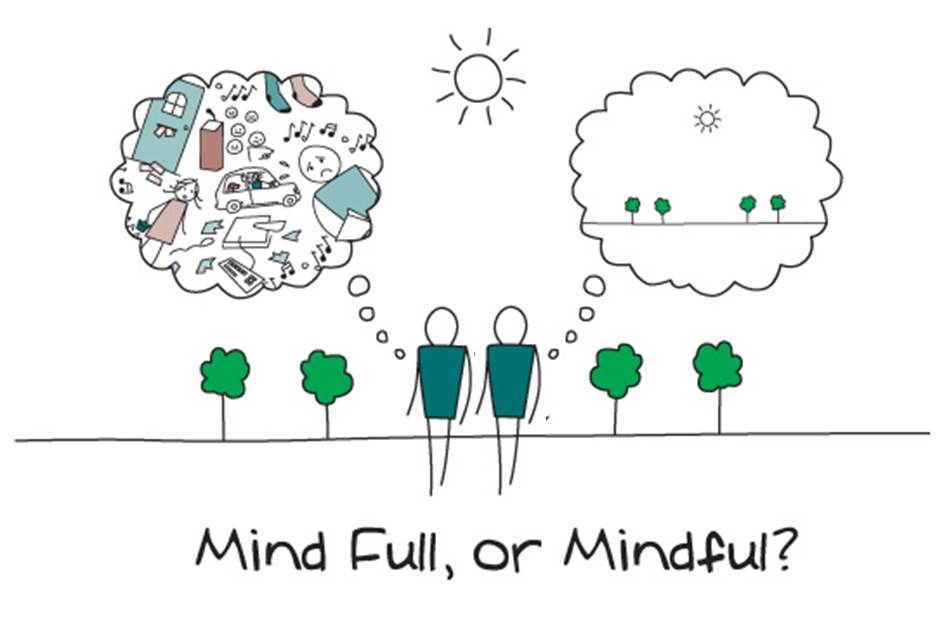
Think Less to Live More
2-People1

Thoughts come in different forms but their main form is through words.

Here are some related insights from Tolle:

“We often believe that words are facts, but in the end, words are just another thing created by humans!”

“When you look at it(anything) or hold it and let it be without imposing a word or mental label on it, a sense of awe, of wonder, arises within you.It’s essence silently communicates itself to you and reflects your own essence back to you…

…This is what great artists sense and succeed in conveying in their art…

…When you don’t cover up the world with words and labels, a sense of the miraculous returns to your life that was lost a long time ago when humanity, instead of using thought, became possessed by thought. A depth returns to your life. Things regain their newness, their freshness.”

And the greatest miracle is the experiencing of your essential self as prior to any words, thoughts, mental labels, and images.”

On that note—TELEVISION!

coacht.blog tv

“So does TV watching create inner space? Does it cause you to be present? Unfortunately, it does not…

…Your mind is inactive only in the sense that it is not producing thoughts. It is, however, continuously absorbing thoughts and images that come through the TV screen. This induces a trancelike passive state of heightened susceptibility, not unlike hypnosis…

…That is why it lends itself to manipulation of “public opinion,” as politicians and special-­interest groups as well as advertisers know and will pay millions of dollars to catch you in that state of receptive unawareness. They want their thoughts to become your thoughts, and usually they succeed…

…Television has this in common with alcohol and certain other drugs. While it provides some relief from your mind, you again pay a high price: loss of consciousness. Like those drugs, it too has a strong addictive quality.”

Another thing your thoughts influence is your idea of who you are.

Nobody can tell you who you are.”

You will learn more about this idea in the next section on the ego—that a current belief is that you are defined by your accomplishments, relationships, career, race, height, skills, etc, but this is NOT who you are. What you are is much more than these transient identities.

Here’s Tolle:

It’s okay to try and figure out about yourself, but don’t confuse knowing about yourself with knowing yourself… 

…The psychoanalysis tells you about yourself, they tell you about how your past has conditioned your behavior and thoughts but it is not you Tolle says. It is content, not essence. Going beyond ego is stepping out of content. Knowing yourself is being yourself, and being yourself is ceasing to identify with content.

“Knowing yourself deeply has nothing to do with whatever ideas are floating around in your mind. Knowing yourself is to be rooted in Being, instead of lost in your mind.”

“You are not the ego, so when you become aware of the ego in you, it does not mean you know who you are – it means you know who you are not. But it is through knowing who you are not that the greatest obstacle to truly knowing yourself is removed.”

Give up defining yourself – to yourself or to others. You won’t die. You will come to life. And don’t be concerned with how others define you. When they define you, they are limiting themselves, so it’s their problem.”

Tolle discusses how there are no absolute truths, although people often define themselves and others in an egoic way that they believe is true. It’s not.

Campo_ultra_profundo_3d

“We need to bear in mind here that nothing we say about the nature of the universe should be taken as an absolute truth…

…Neither concepts nor mathematical formulae can explain the infinite. No thought can encapsulate the vastness of the totality. Reality is a unified whole, but thought cuts it up into fragments. This gives rise to fundamental misperceptions, for example, that there are separate things and events, or that this is the cause of that… 

…Only the whole is true, but the whole cannot be spoken or thought. Seen from beyond the limitations of thinking and therefore incomprehensible to the human mind, everything is happening now…

…As an illustration of relative and absolute truth, consider the sunrise and sunset. When we say the sun rises in the morning and sets in the evening, that is true but only relatively. In absolute terms, it is false…

…Only from the limited perspective of an observer on or near the planet’s surface does the sun rise and set. If you were far out in space, you would see that the sun neither rises nor sets, but that it shines continuously. And yet, even after realizing that, we can continue to speak of the sunrise or sunset, still see its beauty paint it, write poems about it, even though we now know that it is a relative rather than an absolute truth…

…So let us continue to speak for a moment of another relative truth: the coming into form of the universe and its return to the formless, which implies the limited perspective of time, and see what relevance this has to your own life…

…The notion of “my own life” is, of course, another limited perspective created by thought, another relative truth. There is ultimately no such thing as “your” life, since you and life are not two, but one.”

I love the above message from Tolle even though it took me multiple times of reading it to get a good understanding of what he meant. To really realize that you are not the ego/labels/etc that you thought you were. That you are not separate from life, you are completely connected.

As you begin to understand that who you thought you were isn’t who you are, you may experience some insecurity and uncertainty.

Tolle says:

“There may be a period of insecurity and uncertainty. What should I do? As the ego is no longer running your life, the psychological need for external security, which is illusory anyway, lessens…

…You are able to live with uncertainty, even enjoy it. When you become comfortable with uncertainty, infinite possibilities open up in your life. It means fear is no longer a dominant factor in what you do and no longer prevents you from taking action to initiate change…

…The Roman philosopher Tacitus rightly observed that ‘the desire for safety stands against every great and noble enterprise…’

If uncertainty is unacceptable to you, it turns into fear. If it is perfectly acceptable, it turns into increased aliveness, alertness, and creativity

…Many years ago, as a result of a strong inner impulse, I walked out of an academic career that the world would have called ‘promising,’ stepping into complete uncertainty; and out of that, after several years, emerged my new incarnation as a spiritual teacher.”

Here is a parable I heard from the author Tim Ferriss about a person stepping into uncertainty and pursuing what life was guiding them to which is their dreams.

coacht.blog beautiful beach

“Don’t let a mad world tell you that success is anything other than a successful present moment. And what is that? There is a sense of quality in what you do, even the most simple action. Quality implies care and attention, which comes with awareness. Quality requires your Presence.”

You are so much more than how you or anyone else has defined you.

There is beauty beyond words. The joy you once felt as a child you can feel again.

—The human egos current grip on humanity and what you can do about it

“The ego could be defined simply in this way: a dysfunctional relationship with the present moment.”

Our egos are sculpted from the day we are born. We are given labels of who we are and people have an idea of how our future will be. These thoughts, which are expectations, have huge impacts on how each human life unfolds. The reinforcements of people telling us who we are become an obsession until we are constantly thinking that “this is who I am,” and defining ourselves with specific words.

These thoughts get reinforced into the child until they are living completely through their ego, labels & judgments of who they think they are, and this grows stronger throughout life when it is unchecked.

coacht.blog masks

“Many people don’t realize until they are on their deathbed and everything external falls away that no thing ever had anything to do with who they are…

…In the proximity of death, the whole concept of ownership stands revealed as ultimately meaningless…

…They also realize that while they were looking throughout their lives for a more complete sense of self, what they were really looking for, their Being, had actually always already been there, but had been largely obscured by their identification with things, which ultimately means identification with their mind…

…‘Blessed are the poor in spirit, for theirs will be the kingdom of heaven.’

Poor in spirit means no inner baggage, no identifications. Not with things, nor with any mental concepts that have a sense of self in them…

…The kingdom of heaven can be the profound joy of Being that is there when you let go of identifications and so become ‘poor in spirit…’

…This is why renouncing all possessions has been an ancient spiritual practice in both East and West. Although this will not automatically free you of the ego…

…The EGO will attempt to ensure its survival by finding something else to identify with, for example, a mental image of yourself as someone who has transcended all interest in material possessions and is therefore superior, is more spiritual than others.”

Ego is no more than this: identification with form, which primarily means thought forms.”

“The more people identify with their minds, the more they suffer…

…If the sufferer could look at her body without the interfering judgments of her mind or even recognize those judgments for what they are instead of believing in them—or if she could feel her body from within—this would initiate her healing…

…Those who identify with their good looks, strength, or abilities experience suffering when those attributes begin to fade and disappear, as of course they will.

“‘I’ always leads to suffering sooner or later. To refrain from identifying with the body doesn’t mean that you neglect, despise, or no longer care for it. Enjoy and appreciate its attributes while they last. Right nutrition and exercise too.”

“The ego isn’t wrong; it’s just unconscious.
When you observe the ego in yourself, you are beginning to go beyond it.
Don’t take the ego too seriously.
When you detect ego behavior in yourself, smile.  At times you may even laugh.”

One area the ego can be unconscious and bring suffering upon itself is in relationships. 

The ego is constantly on guard, defending itself to maintain the identity it has been giving itself.

Tolle gives these words:

“The ego is always on guard against any kind of perceived diminishment. Automatic ego-­repair mechanisms come into effect to restore the mental form of ‘me’….

 …When someone blames or criticizes me, that to the ego is a diminishment of self, and it will immediately attempt to repair its diminished sense of self through self-­justification, defense, or blaming. Whether the other person is right or wrong is irrelevant to the ego. It is much more interested in self­-preservation than in the truth. This is the preservation of the psychological form of ‘me.’ Even such a normal thing as shouting something back when another driver calls you ‘idiot’ is an automatic and unconscious ego­-repair mechanism. One of the most common ego­-repair mechanisms is anger, which causes a temporary but huge ego inflation. All repair mechanisms make perfect sense to the ego but are actually dysfunctional. Those that are most extreme in their dysfunction are physical violence and self-delusion in the form of grandiose fantasies.”

fb-famlyhealthfr-eco-ego-is-iust-a-small-three-letter-word-30196831

“In addition, gossiping often carries an element of malicious criticism and judgment of others, and so it also strengthens the ego through the implied but imagined moral superiority that is there whenever you apply a negative judgment to anyone…

…If someone has more, knows more, or can do more than I, the ego feels threatened because the feeling of ‘less’ diminishes its imagined sense of self relative to the other. It may then try to restore itself by somehow diminishing, criticizing, or belittling the value of the other person’s possessions, knowledge, or abilities. Or the ego may shift its strategy, and instead of competing with the other person, it will enhance itself by association with that person, if he or she is important in the eyes of others.”

Tolle says to do nothing when someone criticizes or blames you.
        —Check out the parable in section 3 “Is that so?”

“Making yourself right and others wrong is one of the principal egos mind patterns, one of the main forms of unconsciousness.”

“All you need to know and observe in yourself is this: whenever you feel superior or inferior to anyone, that’s the ego in you.”

“The stronger the ego in you, the more likely it is that in your perception other people are the main source of problems in your life. It is also more than likely that you will make life difficult for others. But, of course, you won’t be able to see that. It is always others who seem to be doing it to you…

…The more the sufferer sees himself persecuted, spied on, or threatened by others, the more pronounced becomes his sense of being the center of the universe around whom everything revolves, and the more special and important he feels as the imagined focal point of so many people’s attention. His sense of being a victim, of being wronged by so many people, makes him feel very special. In the story that forms the basis of his delusional system, he often assigns to himself the role of both victim and potential hero who is going to save the world or defeat the forces of evil.”

“Each person is so identified with the thoughts that make up their opinion, that those thoughts harden into mental positions which are invested with a sense of self. In other words: Identity and thought merge. Once this has happened, when I defend my opinions (thoughts), I feel and act as if I were defending my very self. Unconsciously, I feel and act as if I were fighting for survival and so my emotions will reflect this unconscious belief. They become turbulent. I am upset, angry, defensive, or aggressive. I need to win at all costs lest I become annihilated. That’s the illusion. The ego doesn’t know that mind and mental positions have nothing to do with who you are because the ego is the unobserved mind itself.

“An emotion is the body’s response to a thought…
…Emotion in itself is not unhappiness. Only emotion plus an unhappy story is unhappiness.”

“In Zen they say: ‘Don’t seek the truth. Just cease to cherish opinions.’ What does that mean? Let go of identification with your mind. Who you are beyond the mind then emerges by itself.”

fun-zen

Now that you seen some of the toxicity of the ego it’s time to look at what can happen when you live without ego.

“It comes as no surprise that those people who work without ego are extraordinarily successful at what they do. Anybody who is one with what he or she does is building the new earth.”

All truly successful action comes out of that field of alert attention, rather than from ego and conditioned, unconscious thinking.”

Living awakened, without ego, includes modalities of acceptance, enjoyment, and enthusiasm, Tolle discusses:

“Each one represents a certain vibrational frequency of consciousness. You need to be vigilant to make sure that one of them operates whenever you are engaged in doing anything at all – from the most simple task to the most complex. If you are not in the state of either acceptance, enjoyment, or enthusiasm, look closely and you will find that you are creating suffering for yourself and others.”

“To sum up: Enjoyment of what you are doing, combined with a goal or vision that you work toward, becomes enthusiasm. Even though you have a goal, what you are doing in the present moment needs to remain the focal point of your attention; otherwise, you will fall out of alignment with universal purpose… 

…Make sure your vision or goal is not an inflated image of yourself and therefore a concealed form of ego, such as wanting to become a movie star, a famous writer, or a wealthy entrepreneur. Also make sure your goal is not focused on having this or that, such as a mansion by the sea, your own company, or ten million dollars in the bank. An enlarged image of yourself or a vision of yourself having this or that are all static goals and therefore don’t empower you…

…Instead, make sure your goals are dynamic, that is to say, point toward an activity that you are engaged in and through which you are connected to other human beings as well as to the whole. Instead of seeing yourself as a famous actor and writer and so on, see yourself inspiring countless people with your work and enriching their lives. Feel how that activity enriches or deepens not only your life but that of countless others. Feel yourself being an opening through which energy flows form the unmanifested Source of all life through you for the benefit of all.”


But the ego is tricky and tries to find other ways to make it focus on itself, such as dwelling in the past or worrying about the future.

“Your personality, which is conditioned by the past, then becomes your prison. Your memories are invested with a sense of self, and your story becomes who you perceive yourself to be. This “little me” is an illusion that obscures your true identity as timeless and formless Presence.”

Here is a good story Tolle retells which illustrates the unwillingness of the human mind to let go of the past:

“Two Zen monks, Tanzan and Ekido, who were walking along a country road that had become extremely muddy after heavy rains. Near a village, they came upon a young woman who was trying to cross the road, but the mud was so deep it would have ruined the silk kimono she was wearing. Tanzan at once picked her up and carried her to the other side…

twomonks001a

…The monks walked on in silence. Five hours later, as they were approaching the lodging temple, Ekido couldn’t restrain himself any longer. ‘Why did you carry that girl across the road?’ he asked. ‘We monks are not supposed to do things like that.’

‘I put the girl down hours ago,’ said Tanzan. ‘Are you still carrying her?’

…Now imagine what life would be like for someone who lived like Ekido all the time, unable or unwilling to let go internally of situations, accumulating more and more “stuff’ inside, and you get a sense of what life is like for the majority of people on our planet. What a heavy burden of past they carry around with them in their minds.”

“When you make the present moment, instead of past and future, the focal point of your life, your ability to enjoy what you do – and with it the quality of your life – increases dramatically.”

“Your Being then does not shine through form anymore – or only barely. Through nonresistance to form, that in you which is beyond form emerges as an all-encompassing Presence, a silent power far greater than your short-­lived form identity, the person. It is more deeply who you are than anything in the world of form.”

—Techniques & Parables to help you achieve peace

Parable–Not Minding What Happens

“J. Krishnamurti, the great Indian philosopher and spiritual teacher, spoke and traveled almost continuously all over the world for more than fifty years attempting to convey through words ­ which are content – that which is beyond words, beyond content…
Jiddu_Krishnamurti_01

…At one of his talks in the later part of his life, he surprised his audience by asking, ‘Do you want to know my secret?’ Everyone became very alert. Many people in the audience had been coming to listen to him for twenty or thirty years and still failed to grasp the essence of his teaching. Finally, after all these years, the master would give them the key to understanding.

This is my secret,’ he said. ‘I don’t mind what happens.’

Does this mean you can no longer take action to bring abut change in your life? On the contrary. when the basis for your actions is inner alignment with the present moment, your actions become empowered by the intelligence of Life itself.”

**

How to be at peace now? 

“By making peace with the present moment. The present moment is the field on which the game of life happens. It cannot happen anywhere else. Once you have made peace with the present moment, see what happens, what you can do or choose to do, or rather what life does through you. There are three words that convey the secret of the art of living, the secret of all success and happiness: One With Life. Being one with life is being one with Now. You then realize that you don’t live your life, but life lives you. Life is the dancer, and you are the dance.”

**

Don’t seek happiness

“If you seek it, you won’t find it, because seeking is the antithesis of happiness. Happiness is ever elusive, but freedom from unhappiness is attainable now, by facing what is rather than making up stories about it. Unhappiness covers up your natural state of well­being and inner peace, the source of true happiness.”

happiness-is-like-a-butterfly-24

**

How to live a life of abundance in all aspects of life

Try this for a couple of weeks and see how it changes your reality: Whatever you think people are withholding from you—­ praise, appreciation, assistance, loving care, and so on – give it to them. 

You don’t have it? Just act as if you had it, and it will come. 

Then, soon after you start giving, you will start receiving. You cannot receive what you don’t give. Outflow determines inflow. Whatever you think the world is withholding from you, you already have, but unless you allow it to flow out, you won’t even know that you have it. This includes abundance. The law that outflow determines inflow is expressed by Jesus in this powerful image: “Give and it will be given to you. Good measure, pressed down, shaken together, running over, will be put into your lap.”

**

How to be enthusiastic

“Enjoyment of what you are doing, combined with a goal or vision that you work toward, becomes enthusiasm. Even though you have a goal, what you are doing in the present moment needs to remain the focal point of your attention; otherwise, you will fall out of alignment with universal purpose.”

**

How to recognize when ego begins acting in your life & what to do

“SEE if you can catch your voice in the head, perhaps in the moment it complains about something, and recognize it for what it is: The voice of the ego, no more than a conditioned mind-pattern, a thought.

Whenever you notice that voice, you will also realize that you are not the voice, but the one who is aware of it. You are the awareness that is aware of the voice.

In the background, there is awareness. In the foreground, there Is the voice, the thinker.

…In this way you are becoming free of the ego, free of the unobserved mind.

The moment you become aware of the ego in you, it is strictly speaking no longer the ego, but just an old, conditioned mind-pattern.  

Ego implies unawareness.
Awareness and ego cannot coexist.
Every time the ego is recognized, it is weakened.”

**

Parable on accepting everything without taking any of it personally

IS THAT SO?

“The Zen Master Hakuin lived in a town in Japan. He was held in high regard and many people came to him for spiritual teaching. Then it happened that the teenage daughter of his next­door neighbor became pregnant. When being questioned by her angry and scolding parents as to the identity of the father, she finally told them that he was Hakuin, the Zen Master. In great anger the parents rushed over to Hakuin and told him with much shouting and accusing that their daughter had confessed that he was the father. All he replied was, ‘Is that so?’

News of the scandal spread throughout the town and beyond. The Master lost his reputation. This did not trouble him. Nobody came to see him anymore. He remained unmoved. When the child was born, the parents brought the baby to Hakuin. ‘You are the father, so you look after him.’ The Master took loving care of the child. A year later, the mother remorsefully confessed to her parents that the real father of the child was the young man who worked at the butcher shop. In great distress they went to see Hakuin to apologize and ask for forgiveness. ‘We are really sorry. We have come to take the baby back. Our daughter confessed that you are not the father.’ ‘Is that so?’ is all he would may as he handed the baby over to them.

The Master responds to falsehood and truth, bad news and good news, in exactly the same way: ‘Is that so?’ He allows the form of the moment, good or bad, to be as it is and so does not become a participant in human drama. To him there is only this moment, and this moment is as it is. 

kanc58d_osanobu_71_uta-awase_cropped

Events are not personalized. He is nobody’s victim. He is so completely at one with what happens that what happens has no power over him anymore. Only if you resist what happens are you at the mercy of what happens, and the world will determine your happiness and unhappiness.

The baby is looked after with loving care. Bad turns into good through the power of nonresistance. Always responding to what the present moment requires, he lets go of the baby when it is time to do so.

Imagine briefly how the ego would have reacted during the various stages of the unfolding of these events.”

“Non reaction is not weakness but strength. Another word for nonreactor is forgiveness. To forgive is to overlook, or rather to look through. You look through the ego to the sanity that is in every human being as his or her essence.”

“In Zen they say: ‘Don’t seek the truth. Just cease to cherish opinions.’ What does that mean? Let go of identification with your mind. Who you are beyond the mind then emerges by itself.”

**

A Parable on Peace: “This too will pass” 

According to an ancient Sufi story, there lived a king in some Middle Eastern land who was continuously torn between happiness and despondency. The slightest thing would cause him great upset or provoke an intense reaction, and his happiness would quickly turn into disappointment and despair. A time came when the king finally got tired of himself and of life, and he began to seek a way out. He sent for a wise man who lived in his kingdom and who was reputed to be enlightened. When the wise man came, the king said to him, “I want to be like you. Can you give me something that will bring balance, serenity, and wisdom into my life? I will pay back any price you ask.”

The wise man said, “I may be able to help you. But the price is so great that your entire kingdom would not be sufficient to pay for it. Therefore it will be a gift to you if you honor it.” The king gave his assurances and the wise man left.

A few weeks later, he returned and handed the king an ornate box carved in jade. The king opened the box and found a simple gold ring inside. Some letters were inscribed on the ring. The inscription read. This too will pass. “What is the meaning of this?” asked the king. The wise man said, “Wear this ring always. Whatever happens, before you call it good or bad, touch this ring and read the inscription. That way you will always be at peace.”

This too will pass. What is it about this simple words that makes them so powerful? Looking at it superficially, it would seem while those words may provide some comfort in a bad situation, they would also diminish the enjoyment of the good things in life. 

“Don’t be too happy, because it won’t last.” This seems to be what they are saying when applied in a situation that is perceived as good.

…this story points to the fact of impermanence which, when recognized, leads to non-attachment. Non-resistance are the three aspects of true freedom and enlightened living.

Those words inscribed on the ring are not telling you that you should not enjoy the good in your life, nor are they merely meant to provide some comfort in times of suffering. They have a deeper purpose: to make you aware of the fleetingness of every situation, which is due to the transience of all forms- good or bad. When you become aware of the transience of all forms, your attachment to them lessens, and you dis-identify with them to some extent. Being detached does not mean you cannot enjoy the good that the world has to offer. In fact, you enjoy it more. Once you see the transience of all things and the inevitability of change, you can enjoy the pleasures about the future. When you are detached, you gain a higher vantage point from which to view the events in your life instead of being trapped inside them.
coacht.blog this too shall pass

**

What to do when you’re with people

“When you meet with people, at work or wherever it my be, give them your fullest attention

…The human Being becomes more important than the things of this world. It does not mean you neglect whatever needs to be done on a practical level. In fact, the doing unfolds no only more easily, but more powerfully when the dimension of Being is acknowledged and so becomes primary.”

**

How do you measure true success?

“The world will tell you that success is achieving what you set out to do. It will tell you that success is winning, that finding recognition and/or prosperity are essential ingredients in any success. All or some of the above are usually by­products of success, but they are not success…

…The conventional notion of success is concerned with the outcome of what you do. Some say that success is the result of a combination of hard work and luck, or determination and talent, or being in the right place at the right time. While any of these may be determinants of success, they are not its essence. What the world doesn’t tell you – because it doesn’t know – is that you cannot become successful. You can only be successful…

Don’t let a mad world tell you that success is anything other than a successful present moment. And what is that? There is a sense of quality in what you do, even the most simple action. Quality implies care and attention, which comes with awareness. Quality requires your Presence.

**

How to love yourself

“To love is to recognize yourself in another.”

to-love-is-to-recognize-yourself-in-another-eckhart-tolle-19113607

**

How to feel the peace that surpasses understanding

-Realize what the ego is and how it works.

-Allow forms/labels that you once identified with collapse and that will lead to the ego collapsing since ego is identification with form.

“When there is nothing to identify with anymore, who are you?”

Tolle goes on to say:

“When forms around you die or death approaches, your sense of Beingness, of I Am, is freed from its entanglement with form: Spirit is released from its imprisonment in matter.

You realize your essential identity as formless, as an all-pervasive Presence, of Being prior to all forms, all identifications.

You realize your true identity as consciousness itself, rather than what consciousness had identified with.

That’s the peace of God.
The ultimate truth of who you are is not in I am this or I am that, but I Am.
Circumstances and people then become helpful, cooperative. Coincidences happen.

When you yield internally; if action is possible or necessary, your action will be in alignment with the whole and supported by create intelligence, the unconditioned consciousness which in a state of inner openness you become one with. You rest in God.”

**

Parable on Entering Zen

Can You Hear The Mountain Stream?

“A Zen Master was walking in silence with one of his disciples along a mountain trail. When they came to an ancient cedar tree, they sat down under it for a simple meal of some rice and vegetables. After the meal, the disciple, a young monk who had not yet found the key to the mystery of Zen, broke the silence by asking the Master, ‘Master, how do I enter Zen?’

He was, of course, inquiring how to enter the state of consciousness which is Zen.

The Master remained silent. Almost five minutes passed while the disciple anxiously waited for an answer. He was about to ask another question when the Master suddenly spoke. ‘Do you hear the sound of that mountain stream?’

The disciple had not been aware of any mountain stream. He had been too busy thinking about the meaning of Zen. Now as he began to listen for the sound, his noisy mind subsided. At first he heard nothing. Then, his thinking gave way to heightened alertness, and suddenly he did hear the hardly perceptible murmur of a small stream in the far distance.

‘Yes, I can hear it now,’ he said.

The master raised his finger and, with a look in his eyes that in some way was both fierce and gentle, said, ‘Enter Zen from there.’

The disciple was stunned. It was his first satori – a flash of enlightenment. He knew what Zen was without knowing what it was that he knew!

They continued on their journey in silence. The disciple was amazed at the aliveness of the world around him. He experienced everything as if for the first time. Gradually, however, he started thinking again. The alert stillness became covered up again by mental noise, and before long he had another question. ‘Master,’ he said, ‘I have been thinking. What would you have said if I hadn’t been able to hear the mountain stream?’ The master stopped, looked at him, raised his finger and said, ‘Enter Zen from there.’”

wnymi7mkmywhcixkcbfd

—Best Quotes

Give up defining yourself – to yourself or to others. You won’t die. You will come to life. And don’t be concerned with how others define you. When they define you, they are limiting themselves, so it’s their problem.”

“The sapling doesn’t want anything because it is at one with the totality, and the totality acts through it. ‘Look at the lilies of the field, how they grow’ said Jesus, ‘They toil not, neither do they spin. Yet even Solomon in all his glory was not arrayed like one of these.’ We could say that the totality – Life – wants the sapling to become a tree, but the sapling doesn’t see itself as separate from life and so wants nothing for itself. It is one with what Life wants. That’s why it isn’t worried or stressed. And if it has to die prematurely, it dies with ease. It is as surrendered in death as it is in life. It senses, no matter how obscurely, its rootedness in Being, the formless and eternal one Life…

…Doesn’t the existence of any goal imply that there is a temporary disruption in that harmony with the present moment and perhaps a reestablishment of harmony at a higher or more complex level once the goal has been attained? I imagine that the sapling that pushes its way through the soil can’t be in total harmony with the present moment either because it has a goal: It wants to become a big tree. Maybe once it has reached maturity it will lie in harmony with the present moment.”

yourstory-telangana-sapling

Acknowledging the good that is already in your life is the foundation for all abundance. The fact is: Whatever you think the world is withholding from you, you are withholding from the world.”

Those who do not attempt to appear more than they are but are simply themselves, stand out as remarkable and are the only ones who truly make a difference in this world…

…They are the bringers of the new consciousness. Whatever they do becomes empowered because it is in alignment with the purpose of the whole…

…Their influence, however, goes far beyond what they do, far beyond their function. Their mere presence – simple, natural, unassuming – has a transformational effect on whoever they come into contact with.”

Many poets and sages throughout the ages have observed that true happiness – I call it the joy of Being – is found in simple, seemingly unremarkable things.”

“True happiness is not caused by the thing or event, although this is how it first appears”

“There are two reasons why we don’t see this unity, why we see things as separate. One is perception, which reduces reality to what is accessible to us through the small range of our senses: what we can see, hear, smell, taste, and touch. But when we perceive without interpreting or mental labeling, which means without adding thought to our perceptions, we can actually still sense the deeper connectedness underneath our perception of seemingly separate things.

……The other more serious reason for the illusion of separateness is compulsive thinking. It is when we are trapped in incessant streams of compulsive thinking that the universe really disintegrates for us, and we lose the ability to sense the interconnectedness of all that exists. Thinking cuts reality up into lifeless fragments. Extremely unintelligent and destructive action arises out of such a fragmented view of reality.”

“The notion of ‘my own life’ is, of course, another limited perspective created by thought, another relative truth. There is ultimately no such thing as ‘your’ life, since you and life are not two, but one.”

“The meek are the egoless. They are those who have awakened to their essential true nature as consciousness and recognize that essence in all “others,” all life­forms. They live in the surrendered state and so feel their oneness with the whole and the Source. They embody the awakened consciousness that is changing all aspects of life on our planet, including nature, because life on earth is inseparable from the human consciousness that perceives and interacts with it. That is the sense in which the meek will inherit the earth…
…A new species is arising on the planet. It is arising now, and you are it!”

“If uncertainty is unacceptable to you, it turns into fear. If it is perfectly acceptable, it turns into increased aliveness, alertness, and creativity.”

“The decision to make the present moment into your friend is the end of the ego. The ego can never be in alignment with the present moment, which is to say, aligned with life, since its very nature compels it to ignore, resist, or devalue the Now. Time is what the ego lives on. The stronger the ego, the more time takes over your life. Almost every thought you think is then concerned with past or future, and you sense of self depends on the past for your identity and on the future for its fulfillment. Fear, anxiety, expectation, regret, guilt, anger are the dysfunctions of the time­bound state of consciousness.”

Not what you do, but how you do what you do determines whether you are fulfilling your destiny. And how you do what you do is determined by your state of consciousness.”

coacht.blog new earth

I hope you enjoyed this as much as I enjoyed the book A New Earth!

You might also like one of my most viewed posts: 5 Life-Changing Takeaways from the Book, “Way Of The Peaceful Warrior”

Share this message and ask how you can be part of the New Earth!