The Enlightened Fool

“The enlightened fool is the one who sees the ego trips of society and can still find joy and laughter in its midst. The fool is often the enlightened one, the one with crazy wisdom, with laughter and jokes as their weapon, they cut through mundane conformity and bring to light the latent child like bliss bubbling just beneath the surface of all seriousness.  The fool possesses a wisdom that is out of reach of the conformist. A playful attitude in touch with enormous amounts of creativity.”

— Alan Watts

I can’t say that I am an enlightened fool, but this quote makes me want to be more like the enlightened fool described here – to see through the ego trip of society and still find joy & laughter in the midst. – to cut through the mundane conformity and bring to light the child like bliss beneath the surface of all seriousness. To possess a wisdom out of reach from the conformist. A playful attitude in touch with enormous amounts of creativity.

I do sometimes see through the ego trip of society, but I don’t always laugh at it… it’s probably all funny from an objective view, but there is a seriousness needed too, to live our best lives.

Balance, perchance?

27 Profound Philosophical Quotes From Seneca’s ‘On The Shortness of Life’

In this book, On The Shortness of Life, The philosopher Seneca inspires me & readers to live our best lives, to philosophize, to think long term with purpose & yet live fully today.

1 “No one asserts his claim to himself, everyone is wasted for the sake of another…. No one is his own master.”

2 “It is not that we have a short space of time, but that we waste much of it. Life is long enough, and it has been given in sufficiently generous measure to allow the accomplishment of the very greatest things if the whole of it is well invested…But when it is squandered in luxury and carelessness, when it is devoted to no good end, forced at last by the ultimate necessity we perceive that it has passed away before we were aware that it was passing.”

3 “Why do we complain of Nature? She has shown herself kindly; life, if you know how to use it, is long. But one man is possessed by an avarice that is insatiable, another by a toilsome devotion to tasks that are useless; one man is besotted with wine, another is paralyzed by sloth; one man is exhausted by an ambition that always hangs upon the decision of others, another, driven on by the greed of the trader, is led over all lands and all seas by the hope of gain; some are tormented by a passion for war and are always either bent upon inflicting danger upon others or concerned about their own; some there are who are worn out by voluntary servitude in a thankless attendance upon the great; many are kept busy either in the pursuit of other men’s fortune or in complaining of their own; many, following no fixed aim, shifting and inconstant and dissatisfied, are plunged by their fickleness into plans that are ever new; some have no fixed principle by which to direct their course, but Fate takes them unawares while they loll and yawn—so surely does it happen that I cannot doubt the truth of that utterance which the greatest of poets delivered with all the seeming of an oracle: “The part of life we really live is small”

4 “Look at those whose prosperity men flock to behold; they are smothered by their blessings. To how many are riches a burden! From how many do eloquence and the daily straining to display their powers draw forth blood! How many are pale from constant pleasures! To how many does the throng of clients that crowd about them leave no freedom!”

5 “Men do not suffer anyone to seize their estates, and they rush to stones and arms if there is even the slightest dispute about the limit of their lands, yet they allow others to trespass upon their life—nay, they themselves even lead in those who will eventually possess it…No one is to be found who is willing to distribute his money, yet among how many does each one of us distribute his life!”

6 “Cicero said that he was ‘half a prisoner.’ But, in very truth, never will the wise man resort to so lowly a term, never will he be half a prisoner—he who always possesses an undiminished and stable liberty, being free and his own master and towering over all others.”

7 “Finally, everybody agrees that no one pursuit can be successfully followed by a man who is busied with many things—eloquence cannot, nor the liberal studies—since the mind, when its interests are divided, takes in nothing very deeply, but rejects everything that is, as it were, crammed into it.”

8 “It takes the whole of life to learn how to live, and—what will perhaps make you wonder more—it takes the whole of life to learn how to die.”

9 “Believe me, it takes a great man and one who has risen far above human weaknesses not to allow any of his time to be filched from him, and it follows that the life of such a man is very long because he has devoted wholly to himself whatever time he has had.None of it lay neglected and idle; none of it was under the control of another, for, guarding it most grudgingly, he found nothing that was worthy to be taken in exchange for his time. And so that man had time enough, but those who have been robbed of much of their life by the public, have necessarily had too little of it.”

10 “And so there is no reason for you to think that any man has lived long because he has grey hairs or wrinkles; he has not lived long—he has existed long. For what if you should think that that man had had a long voyage who had been caught by a fierce storm as soon as he left harbour, and, swept hither and thither by a succession of winds that raged from different quarters, had been driven in a circle around the same course? Not much voyaging did he have, but much tossing about.”

11 “They keep themselves very busily engaged in order that they may be able to live better; they spend life in making ready to live! They form their purposes with a view to the distant future; yet postponement is the greatest waste of life; it deprives them of each day as it comes, it snatches from them the present by promising something hereafter. The greatest hindrance to living is expectancy, which depends upon the morrow and wastes to-day. You dispose of that which lies in the hands of Fortune, you let go that which lies in your own. Whither do you look? At what goal do you aim? All things that are still to come lie in uncertainty; live straightway.”

12 “The mind that is untroubled and tranquil has the power to roam into all the parts of its life; but the minds of the engrossed, just as if weighted by a yoke, cannot turn and look behind.”

13 “And so, however small the amount of it, it is abundantly sufficient, and therefore, whenever his last day shall come, the wise man will not hesitate to go to meet death with steady step.”

14 “To think that there is anyone who is so lost in luxury that he takes another’s word as to whether he is sitting down! This man, then, is not at leisure, you must apply to him a different term—he is sick, nay, he is dead; that man is at leisure, who has also a perception of his leisure. But this other who is half alive, who, in order that he may know the postures of his own body, needs someone to tell him—how can he be the master of any of his time?”

15 “Of all men they alone are at leisure who take time for philosophy, they alone really live; for they are not content to be good guardians of their own lifetime only. They annex ever age to their own; all the years that have gone ore them are an addition to their store. Unless we are most ungrateful, all those men, glorious fashioners of holy thoughts, were born for us; for us they have prepared a way of life. By other men’s labours we are led to the sight of things most beautiful that have been wrested from darkness and brought into light; from no age are we shut out, we have access to all ages, and if it is our wish, by greatness of mind, to pass beyond the narrow limits of human weakness, there is a great stretch of time through which we may roam.”

16 “Those who rush about in the performance of social duties, who give themselves and others no rest, when they have fully indulged their madness, when they have every day crossed everybody’s threshold, and have left no open door unvisited, when they have carried around their venal greeting to houses that are very far apart—out of a city so huge and torn by such varied desires, how few will they be able to see?”

17 “But the works which philosophy has consecrated cannot be harmed; no age will destroy them, no age reduce them; the following and each succeeding age will but increase the reverence for them, since envy works upon what is close at hand, and things that are far off we are more free to admire. *** The life of the philosopher, therefore, has wide range, and he is not confined by the same bounds that shut others in. He alone is freed from the limitations of the human race; all ages serve him as if a god. Has some time passed by? This he embraces by recollection. Is time present? This he uses. Is it still to come? This he anticipates. He makes his life long by combining all times into one.”

18 “He will have friends from whom he may seek counsel on matters great and small, whom he may consult every day about himself, from whom he may hear truth without insult, praise without flattery, and after whose likeness he may fashion himself.”

19 “But those who forget the past, neglect the present, and fear for the future have a life that is very brief and troubled; when they have reached the end of it, the poor wretches perceive too late that for such a long while they have been busied in doing nothing.”

20 “They lose the day in expectation of the night, and the night in fear of the dawn.”

21 “The very pleasures of such men are uneasy and disquieted by alarms of various sorts, and at the very moment of rejoicing the anxious thought comes over them: How long will these things last?” This feeling has led kings to weep over the power they possessed, and they have not so much delighted in the greatness of their fortune, as they have viewed with terror the end to which it must some time come.”

22 “Moreover, what is doomed to perish brings pleasure to no one; very wretched, therefore, and not merely short, must the life of those be who work hard to gain what they must work harder to keep. By great toil they attain what they wish, and with anxiety hold what they have attained; meanwhile they take no account of time that will never more return.”

23 “The condition of all who are engrossed is wretched, but most wretched is the condition of those who labour at engrossments that are not even their own, who regulate their sleep by that of another, their walk by the pace of another, who are under orders in case of the freest things in the world—loving and hating. If these wish to know how short their life is, let them reflect how small a part of it is their own.”

24 “And so when you see a man often wearing the robe of office, when you see one whose name is famous in the Forum, do not envy him; those things are bought at the price of life.  They will waste all their years, in order that they may have one year reckoned by their name.”

25 “Meantime, while they rob and are being robbed, while they break up each other’s repose, while they make each other wretched, their life is without profit, without pleasure, without any improvement of the mind.”

26 “No one keeps death in view, no one refrains from far-reaching hopes; some men, indeed, even arrange for things that lie beyond life—huge masses of tombs and dedications of public works and gifts for their funeral-pyres and ostentatious funerals. But, in very truth, the funerals of such men ought to be conducted by the light of torches and wax tapers, as though they had lived but the tiniest span.”

27 “And so, my dearest Paulinus, tear yourself away from the crowd, and, too much storm-tossed for the time you have lived, at length withdraw into a peaceful harbour. Think of how many waves you have encountered, how many storms, on the one hand, you have sustained in private life, how many, on the other, you have brought upon yourself in public life; long enough has your virtue been displayed in laborious and unceasing proofs—try how it will behave in leisure. The greater part of your life, certainly the better part of it, has been given to the state; take now some part of your time for yourself as well. And I do not summon you to slothful or idle inaction, or to drown all your native energy in slumbers and the pleasures that are dear to the crowd. That is not to rest; you will find far greater works than all those you have hitherto performed so energetically, to occupy you in the midst of your release & retirement.”
10 Quotes From Dan Millman’s The Peaceful Warrior To Bring You Happiness Today

1) “There is no need to search; achievement leads to nowhere. It makes no difference at all, so just be happy now! Love is the only reality of the world, because it is all One, you see. And the only laws are paradox, humor and change. There is no problem, never was, and never will be. Release your struggle, let go of your mind, throw away your concerns, and relax into the world. No need to resist life, just do your best. Open your eyes and see that you are far more than you imagine. You are the world, you are the universe; you are yourself and everyone else, too! It’s all the marvelous Play of God. Wake up, regain your humor. Don’t worry, just be happy. You are already free!” 

2) “Reality never matched their dreams; happiness was just around the corner — a corner they never turned. And the source of it all was the human mind.”

3) “Sometimes sorrow, sometimes joy. But beneath it all remember the innate perfection of your life unfolding. That is the secret of unreasonable happiness.” 

4) “And so I awoke to reality, free of any meaning or any search. What could there possibly be to search for? All of Socrate’s words had come alive with my death. This was the paradox of it all, the humor of it all, and the great change. All searches, all achievements, all goals, were equally enjoyable, and equally unnecessary.” 

5) “Act happy, be happy, without a reason in the world. Then you can love, and do what you will.”

6) “The secret of happiness, you see, is not found in seeking more, but in developing the capacity to enjoy less.”

7) “‘What do I do then, now? Where do I go from here?’ Dan asked Socrates.

‘Who cares?’ He yelled gleefully.  ‘A fool is ‘happy’ when his cravings are satisfied. A warrior is happy without reason.  That’s what makes happiness the ultimate discipline—above all else I have taught you.’”

8) “Stay in the present. You can do nothing to change the past, and the future will never come exactly as you plan or hope for.  The warrior is here, now. Your sorrow, your fear & anger, regret & guilt, your envy and plans and cravings live only in the past, or in the future.”

9) “Like most people, you’ve been taught to gather information from outside yourself; from books, magazines, experts.  Like this car, you open up and let the facts pour in.  Sometimes the information is premium and sometimes it’s low octane.  You buy your knowledge at the current market rates, much like you buy gasoline.  Like this gas tank, you are overflowing with preconceptions; full of useless knowledge.  You hold many facts and opinions, yet know little of yourself.  Before you can learn, you’ll have to first empty your tank.

10) “Wake up! If you knew for certain that you had a terminal illness – if you had precious little time left to make use of your life and consider who you are, you’d not waste time on self-indulgence or fear, lethargy or ambition.  You do have a terminal illness – it is death. Be happy now, without reason – or you never will be at all.”

Adversity is a Gift

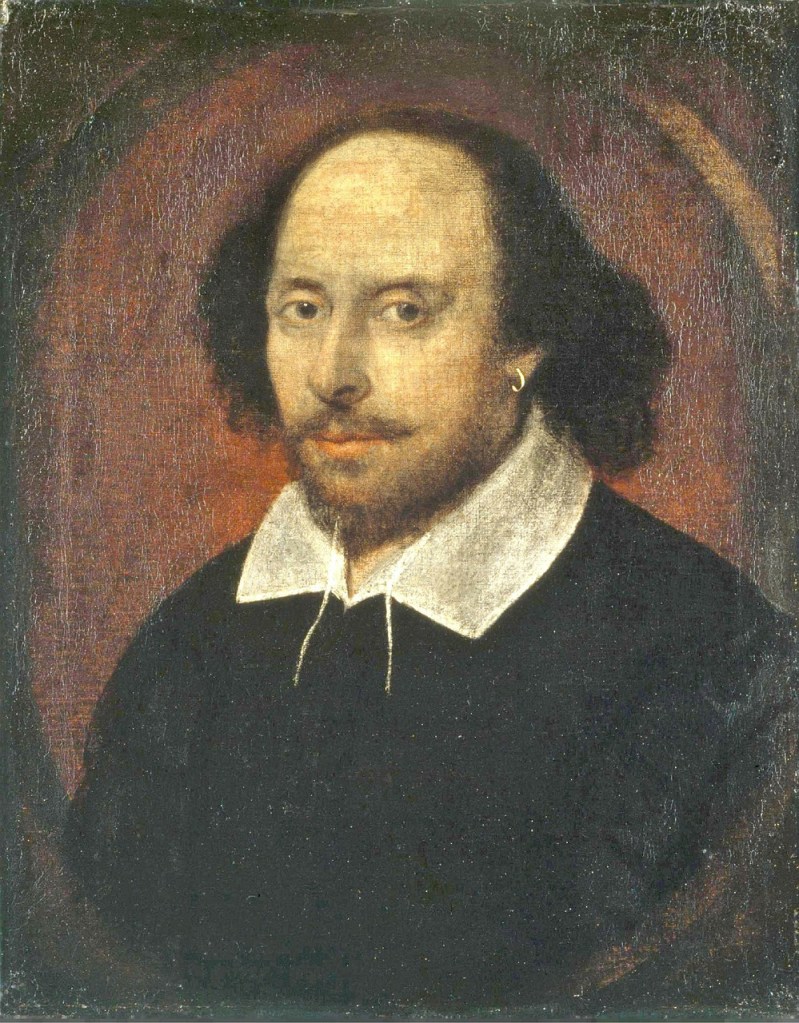
“Let me embrace thee, sour adversity, for wise men say it is the wisest course.”
—William Shakespeare 

You lost the election.

You bet on the wrong stock.

You missed the game winning field goal.

You fell down face first into a pile of mud.

And it hurt. 

It still does sometimes.

But you weren’t meant to remain in pain.

The pain – the adversity, is an opportunity to grow, to learn, to prosper, but in the moments it happens it’s almost impossible to appreciate.

Adversity doesn’t feel good, but it carries within it a gift.

The gift of experience.

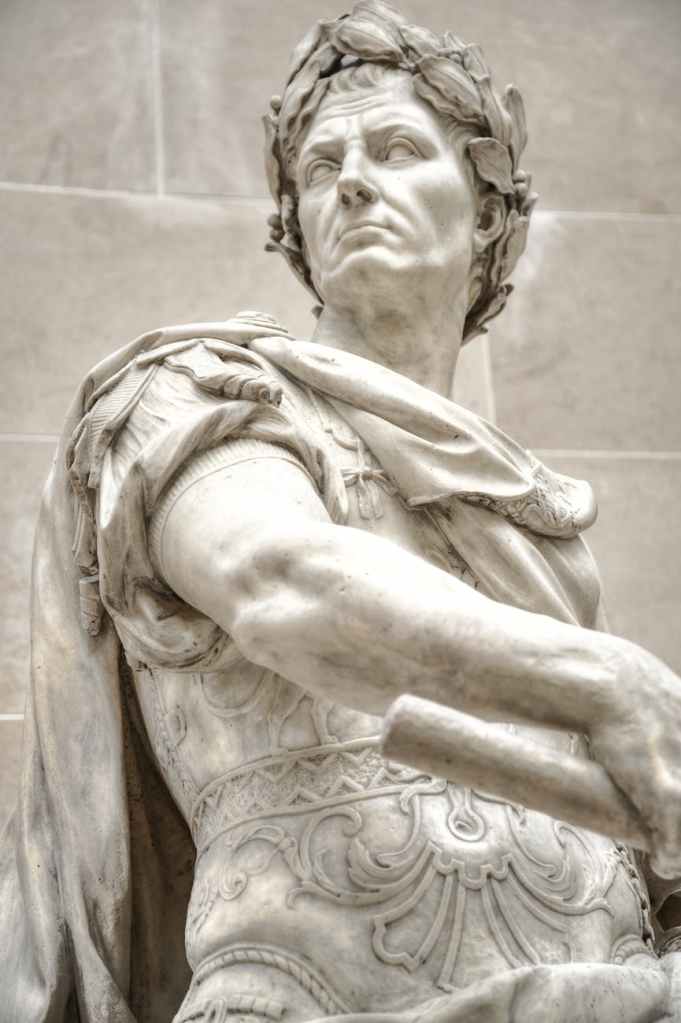
“Experience is the teacher of all things.”
—Julius Caesar

The gift may be hidden, but it’s there, waiting for you to find it, open it, & move forward – stronger, wiser, and ready for the next opportunity.

27 Empowering Quotes from Don Jose Ruiz’s Wisdom of the Shamans

1) Are there any areas of your life where you want to inflict your own beliefs on others? Do you try and control others? For instance, do you think the path of the shaman is the way for everyone? It isn’t. Other people are on their own paths and moving through life in their own time and at their own pace. 

2) One of the hallmarks of a shaman is that rather than adopting the beliefs of others, the shaman looks inside herself for the answers that are already there.

3) The shaman follows her own path, not one that was laid out by others. 

4) The story of our initiation also demonstrates how some shamans can commune with nature in a way that cannot be explained.

5) Despite the great interest in these miraculous occurrences, my father has never let these phenomena distract from the primary message of shamanism and his teachings: find your own personal freedom, heal yourself from the addiction to suffering, be of service to others. 

6) A power object, or what could also be called a totem, is a sacred object or symbol that a shaman forms a relationship with, which enables her to call upon the power of whatever the object represents. 

7) Animals live in complete awareness of the present moment without mitote or the parasite, and therefore they have direct access to silent wisdom. 

8) As I have been driving home throughout this book, the path of the shaman is about following your own truth, and yours will be different from mine. 

9) Am I honoring my own personal truth, or am I trying to live up to someone else’s ideals? 

10) For those of you who are unfamiliar with this term, self-domestication occurs when you take the beliefs of others and punish or otherwise coerce yourself into following them, even when they go against your own personal truth. With self-domestication, you no longer need the domesticator to be in your life, as you have taken over that role. 

11) Finally, when he looked deep within himself and admitted his own personal truth, a massive weight lifted from his shoulders. All the internal struggle of trying to be something that he wasn’t disappeared. 

12) I don’t know if my grandmother knew any of these similar stories, but I do know that she was clear about one thing, and that is that God, the Great Spirit, the nagual, or whatever word you use to describe the Divine, resides in all of us.

13) While we can’t do anything to change the dream of others, our own dream is entirely within our power.

14) For instance, how do you treat people who don’t share your political or spiritual beliefs or other viewpoints you consider important? Do you try and subjugate them to your own perspective? Do you try to domesticate them to your way of thinking? By attempting to domesticate others, we feed our own addiction to suffering. 

15) One practice to reverse this within yourself is to consciously focus on the divinity in the human sitting in front of you, respecting their choices and point of view, and acting toward them from a place of love. 

16) If you want to have a sacred interaction with another, the first step is to really listen to them.

17) Listen without judging; listen without thinking about what you will say next. Just listen. By doing so, you will find out what this person’s message is for you and experience the sacredness of that connection in the process. 

18) …After many years, on the anniversary of his death, the woman began to make her customary pilgrimage, but this time, when she reached the top there was a great shaman sitting next to the waterfall. The shaman said to her, “It is wonderful to honor the dead, but who is it that you are honoring?” 
The young woman was confused. 
The shaman continued, “If you want to honor the dead, you honor the wrong person. Look in the mirror. It is you who are dead. You aren’t allowing yourself to go on with your life. Anyone who lives chained to the past lives in fear and grief. Regret isn’t living; it is dying.” 

19) During the Day of the Dead, we imagine a loved one coming from beyond the grave. They see how you are suffering, and they tell you, “Hey, you are alive! You are not dead, you are alive! C’mon, wake up and celebrate life! Stop being dead.” 

20) So often we search for our own personal freedom with such diligence and seriousness that we forget that the shamanic path is also about having fun.We can get so devoted to our inner and outer work that we forget that a strong belly laugh is one of the best cures for the mind’s addiction to suffering. 

21) Enjoying life and doing things for no other reason than to have fun is a part of maintaining balance.

22) In shamanism, celebrating life means having an open and grateful heart for all that life brings us. This open heart is what allows you to see beyond what the mind typically labels as “good” or “evil,” enough or not enough, even happy and sad. When you reside in the nagual that exists in all things, you find that you are able to keep your heart open even in the face of terrorist attacks, natural disasters, or any other nightmare in the Dream of the Planet.

23) The alternative is to let these situations draw you back into the addiction of suffering, and that’s how the cycle of negativity continues. 

24) Celebrating life doesn’t mean you won’t experience the normal human emotions of sadness and grief. One of the beautiful things about being human is that we can have multiple emotions, positive and negative, at the same time. It means you feel those emotions without fighting them, without turning them into the emotional poisons of anger, a desire for revenge, or hatred. Embracing tragedies with an open heart is one of the most difficult practices to undertake. It takes great courage even to attempt to live in this way. 

25) So often we hold on to those old ideas of vice and virtue, enough or not enough. This is one of the things that cause us to live as though we were dead. In order to celebrate our perfection, we must give up the idea that we are a project waiting to be fixed or a goal that needs to be obtained. You are not damaged goods. You are perfect just as you are. 

26) There is nothing wrong with you, and this includes when you are in suffering or creating suffering. Suffering does not mean that you are in any way deficient or not enough or incapable.

27) Here is what is important to remember, a message directly from my heart to yours, truth to truth: You are perfect, my friend, exactly as you are. Celebrate it! 

Intro to Stoicism

Oxford Dictionary defines Stoicism as “an ancient Greek school of philosophy founded at Athens by Zeno of Citium. The school taught that virtue, the highest good, is based on knowledge; the wise live in harmony with the divine Reason (also identified with Fate and Providence) that governs nature, and are indifferent to the vicissitudes of fortune and to pleasure and pain.

At its core, Stoicism is about trusting life as it is, not how we think it should be. 

It’s about focusing on what’s in our control — our lives, and acting virtuously, not being pushed and pulled by our emotions.

Practicing Stoicism helps us see life objectively, giving us an understanding that we are not the center of the Universe — That the Universe is indifferent to our thoughts and feelings, and that that’s perfectly okay. This knowledge helps us live less selfishly and more cooperatively.

Stoicism has been practiced for thousands of years by numerous people. Other than Zeno, a few famous early practitioners of Stoicism were Marcus Aurelius, Seneca, and Epictetus, about 2,000 years ago. The modern day leader in Stoicism is Ryan Holiday, who gave me the opportunity to intern with him; a modern day apprenticeship. There were many events that led to this, it didn’t just happen, which you can read how it all came to be here on Thought Catalog.

During this time Holiday deepened my knowledge of Stoicism, inspiring me to apply these practices into my life — which doesn’t make someone perfect, it just makes us more Stoic, which you can decide if that’s good or bad.

I contemplated Stoic ideas before knowing they were Stoic ideas, thinking they were just far-out thoughts. Then, when reading Holiday’s book recommendations, I came across Meditations by Marcus Aurelius, and devoured it. It was one of those books that I got pulled into and didn’t want to leave. I highly recommend reading the whole book, but here’s a link to some of Meditation’s main ideas for now.

Below are 4 fundamental Stoic principles you can begin practicing today:

1) Asking, “Is this within my control?”

—If yes, ask, “How can I act virtuously in this moment?”
—If not, ask, “How can I act virtuously in this moment?”

Most of life isn’t in our control, but our response is.

2) Sympatheia

—This is the idea that all things are connected and mutually interdependent. 

Roman Emperor Marcus Aurelius, in Meditations, wrote: 

“The universe made rational creatures for the sake of each other, with an eye toward mutual benefit based on true value and never for harm.”

Here is a YouTube video speech given by Carl Sagan to view life from a perspective outside of yourself, thus, growing in the practice of Sympatheia.

3) Amor Fati

—The idea and practice of loving your fate. 
—Things often don’t happen as we’d like them to happen, but we can learn to appreciate all that happens to us by practicing Amor Fati.

Here is a link to an ancient proverb, telling us a story that shows us how when we think something “bad” has happened, it can be good in disguise, and when we think something “good” has happened, it can be bad in disguise. It’s one of my favorite stories and has broadened my way of thinking.

Nietzsche is quoted saying, “my formula for greatness in a human being is Amor Fati: that one wants nothing to be different, not forward, not backward, not in all eternity. Not merely bear what is necessary, still less conceal it, but love it.”

Epictetus, born a slave, said: “Demand not that things happen as you wish, but wish them to happen as they do, and you will go on well.”

4) Memento Mori

—Remember you will die.
—This idea scares some people, but it inspires Stoics.  

“If everything is ephemeral, what does matter? Right now matters. Being a good person and doing the right thing right now, that’s what matters and that’s what was important to the Stoics. Be humble and honest and aware.”
Ryan Holiday

We all know we are going to die one day, but it is a subject rarely talked about. We’d rather ignore the fact of death instead of embrace it, so it ends up scaring the hell out of us. Let’s start discussing the topic of death. Let’s let it inspire us to live life wholly, focusing on what’s important, keeping in mind we won’t live forever, and that’s okay.

Here are some inspiring Memento Mori related quotes:

“Every third thought shall be my grave.”
William Shakespeare

“People who are excited by posthumous fame forget that the people who remember them will soon die too. And those after them in turn. Until their memory, passes from one to another like a candle flame, gutters and goes out.”
Marcus Aurelius

“So this is how a thoughtful person should await death: not with indifference, not with impatience, not with disdain, but simply viewing it as one of the things that happens to us. Now you anticipate the child’s emergence from its mother’s womb; that’s how you should await the hour when your soul will emerge from its compartment.”
Marcus Aurelius

“Stop whatever you’re doing for a moment and ask yourself: Am I afraid of death because I won’t be able to do this anymore?”
Marcus Aurelius

“To practice death is to practice freedom. A man who has learned how to die has unlearned how to be a slave.” 
Michel de Montaigne

“Of all the footprints, that of the elephant is supreme. Similarly, of all mindfulness meditation, that on death is supreme.”
Buddha

These are just a few Stoic principles you can begin practicing today. I recommend checking out dailystoic.com for more articles on Stoicism, reminders to:

Act virtuously.
Trust the unknown.
Love your fate.
Remember death.

“If” Inspirational Poem by Rudyard Kipling

If you can keep your head when all about you   
Are losing theirs and blaming it on you,   

If you can trust yourself when all men doubt you,
But make allowance for their doubting too;  
 

If you can wait and not be tired by waiting,
Or being lied about, don’t deal in lies,
Or being hated, don’t give way to hating,
And yet don’t look too good, nor talk too wise:

If you can dream—and not make dreams your master;   
If you can think—and not make thoughts your aim;   

If you can meet with Triumph and Disaster
And treat those two impostors just the same;   
If you can bear to hear the truth you’ve spoken
Twisted by knaves to make a trap for fools,

Or watch the things you gave your life to, broken,
And stoop and build ’em up with worn-out tools:
If you can make one heap of all your winnings
And risk it on one turn of pitch-and-toss,
And lose, and start again at your beginnings
And never breathe a word about your loss;

If you can force your heart and nerve and sinew
To serve your turn long after they are gone,   
And so hold on when there is nothing in you
Except the Will which says to them: ‘Hold on!’

If you can talk with crowds and keep your virtue,   
Or walk with Kings—nor lose the common touch,
If neither foes nor loving friends can hurt you,
If all men count with you, but none too much;

If you can fill the unforgiving minute
With sixty seconds’ worth of distance run,   
Yours is the Earth and everything that’s in it,   
And—which is more—you’ll be a Man, my son!

Intro to A Panda’s Journey

The word “panda” originates from the Sanskrit word paṇḍita meaning ‘learned, wise’.

A Panda’s Journey incorporates Spirit & Mind with Quantum Physics to reveal the power within you. 

The power within us all.

The power of realizing you are in control of your destiny.

21 Best Buddha Quotes Showing The Power of Your Mind

1 — “The mind is everything. What you think you become.”

2 — “All experiences are preceded by mind, having mind as their master, created by mind.”

3 — “All wrong-doing arises because of mind. If mind is transformed can wrong-doing remain?”

4 — “What we are today comes from our thoughts of yesterday, and our present thoughts build our life of tomorrow: Our life is the creation of our mind.”

5 — “To enjoy good health, to bring true happiness to one’s family, to bring peace to all, one must first discipline and control one’s own mind. If a man can control his mind he can find the way to Enlightenment, and all wisdom and virtue will naturally come to him.”

6 — “He is able who thinks he is able.” 

7 — “What you think you create, what you feel you attract, what you imagine you become.”

8 — “Everything is based on mind, is led by mind, is fashioned by mind. If you speak and act with a polluted mind, suffering will follow you as the wheels of the oxcart follow the footsteps of the ox.”

9 — “There is nothing so disobedient as an undisciplined mind, and there is nothing so obedient as a disciplined mind.”

10 — “It is a man’s own mind, not his enemy or foe, that lures him to evil ways.” 

11 — “Nothing can harm you as much as your own thoughts unguarded.”

12 — “What you are is what you have been. What you’ll be is what you do now.”

13 — “We are shaped by our thoughts; we become what we think. When the mind is pure, joy follows like a shadow that never leaves.”

14 — “The secret of health for both mind and body is not to mourn for the past, not to worry about the future, not to anticipate the future, but to live the present moment wisely and earnestly.”

15 — “Irrigators channel waters; fletchers straighten arrows; carpenters bend wood; the wise master themselves.”

16 — “Delight in heedfulness! Guard well your thoughts!”

17 — “You are a seeker. Delight in the mastery of your hands and your feet, of your words and your thoughts.”

18 — “In the sky, there is no distinction of east and west; people create distinctions out of their own minds and then believe them to be true.”

19 — “The external world is only a manifestation of the activities of the mind itself, and the mind grasps it as an external world simply because of its habit of discrimination and false-reasoning. The disciple must get into the habit of looking at things truthfully.”

20 — “Whatever a monk keeps pursuing with his thinking and pondering, that becomes the inclination of his awareness.”

21 — “Drop by drop is the water pot filled. Likewise, the wise man, gathering it little by little, fills himself with good.”

_______________________________________________

Intro to Alan Watts

Born—January 6, 1915, England.

Growing Up

—His grandpa on his mother’s side of the family was a missionary.

—Alan had interest in storybook fables, mysterious tales, and the idea of “ultimate things” – likely influenced by his mother’s religious family.

—At an early age he was interested in Buddhism.

—Alan became an Episcopal priest in the United States in 1938, before moving to Millbrook, New York.

—He wrote a number of books.

—Moved to San Francisco in 1951, teaching Buddhist studies.

—He became a worldwide spiritual speaker, with the help of his radio show “Way Beyond the West” giving lectures, writing books, living zen, throughout his days.

Written Books

—The Wisdom of Insecurity: A Message for the Age of Anxiety

—The Book: On the Taboo Against Knowing Who You Are

—The Way of Zen

—Become What You Are

—The Meaning of Happiness 

—Out Of Your Mind

—This Is It

—What Is Tao?

—In My Own Way: An Autobiography

—The Joyous Cosmology: Adventures in the Chemistry of Consciousness

—Nature, Man and Woman

These are only a small amount of all his publications, which you can find here at the Alan Watts Organization.

Alan Watts is known for multiple things, some of them are for bringing Zen and Buddhist teachings to the West.

He not only spoke of his beliefs, he manifested them, because he knew who he was at a deep universal level.

He knows how difficult those ideas are to be comprehended, but he explained it well so that if you listen enough, you might get it, but also that there’s nothing to get 🙂

One of the many ways he has influenced my life is getting me to wonder what I would do if I didn’t have to worry about money.

Here is Watt’s 3 minute speech on the above idea that changed my life.

He has so many other works that you can find on YouTube, bookstores, anywhere online. 

Died — November 16, 1973, California.

“I had a discussion with a great master in Japan…and we were talking about the various people who are working to translate the Zen books into English, and he said, ‘That’s a waste of time. If you really understand Zen…you can use any book. You could use the Bible. You could use Alice in Wonderland. You could use the dictionary, because…the sound of the rain needs no translation’.”

“And people get all fouled up because they want the world to have meaning as if it were words… As if you had a meaning, as if you were a mere word, as if you were something that could be looked up in a dictionary. You are meaning.”

“If you see yourself in the correct way, you are all as much extraordinary phenomenon of nature as trees, clouds, the patterns in running water…You are all just like that, and there is nothing wrong with you at all.”

“So then, the relationship of self to other is the complete realization that loving yourself is impossible without loving everything defined as other than yourself.”

Here are 69 of Watt’s best quotes. I wrote down many of his quotes before numbering them and it just happened to be 69. Enjoy.